Showing posts with label Zappey's Flycatcher. Show all posts

Monday, June 29, 2020

June Torpor


The unknowable mysteries of the Ancient Murrelet
  Not been getting up to any real birding lately, borrrring.
  I have been re-reading the new Lynx Birds of Japan guide by Otani Chikara on the porch while sipping on sweet sweet Korean instant coffee.
  It’s always provocative to take in a fresh perspective on the birds of the region. They’ve renamed and split/lumped a lot of species, but I'm still a bit out of touch with all the recent taxonomic changes, so it's hard to figure out how much of this is unilateral. For example, the guide has given full species treatment to every White (and Yellow) Wagtail subspecies, and confusingly, fresh new names to boot. While the expanded ID descriptions are helpful to someone like me who still struggles with non-breeding wagtails at times, the excessive splitting/renaming must be confusing to the lists/taxonomies of some birders.
  The illustrations are mostly excellent throughout – notably the superb Acrocephalus warbler plates by Ian Lewington. I noticed the Zappey’s Flycatcher is relatively well described and illustrated…but it isn’t on the same page as Blue-and-white Flycatcher, which would have been nice. Same goes for several other paired/confusion species such as Naumann’s/Dusky Thrush, which by all rights ought to be on same page for ease of comparison. This is a minor quibble.
  One quirk is an almost complete lack of awareness, purposeful or not, on the disposition of birds in Korea. The bibliography mentions no Korean guides, and there are inevitably (literal) question marks on the maps when it comes to long-established Korean bird ranges, or the range won't extend into Korea, even when Korea is included on the range map. Hopefully this is due to lack of research, and not some silly political stance. I did note they avoided labelling Dokdo/Takeshima on the map, which was something at least.

  What else...almost no in-flight illustrations is a con, while detailed accounts of the species of vegetation associated with favoured habitat is a pro.
  Overall the guide is quite stimulating to the Korean birder that slumbers inside me. While reading it I caught myself making lists without really even noticing – stuff like “Potential vagrants to Korea,” and “Species records to double-check.” I stand by my fevered assertion that Ryukyu Robins will be found in the hills of Geomun-do one glorious day...

  On June 14th, I peeked over the top of the Japan guide to observe several adult House Sparrows feeding a begging juvenile several feet away, for 30 minutes. Suddenly, several European Starlings screeched their alarm from overhead, and a small pointed shadow crashed into the bush where the young sparrow was last seen. The Merlin then flew a tight figure eight over the front yard so close I felt the wind from its wingbeats, before vanishing across the street. All was quiet for ten minutes, when a male House Sparrow returned and called urgently for a while in the bush, with no response.
  

  At 8:14am on June 23rd, I watched a Great Egret drift north towards the Westmount Summit.

Wednesday, April 17, 2013

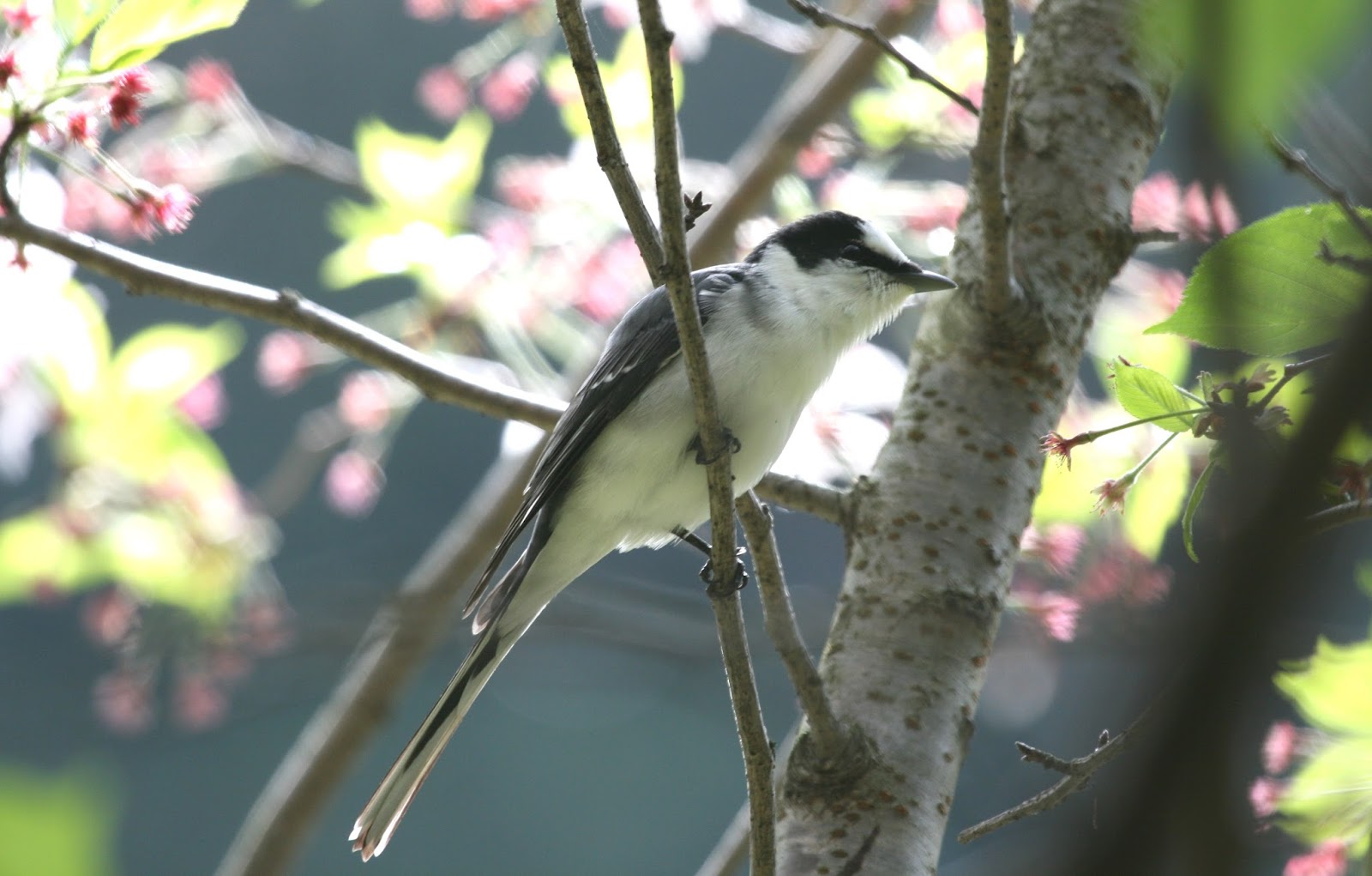
Zappey's Flycatcher - Cyanoptila cumatilis (armchair tick!)

Zappey's Flycatcher - Cyanoptila cumatilis
(Seogwipo, Jeju, South Korea, April 2010)
Zappey's Flycatcher - Cyanoptila cumatilis
(Seogwipo, Jeju, South Korea, April 2010)
Blue-and-white Flycatcher - Cyanoptila cyanomelana for comparison
(Mara-do, Jeju, South Korea, April 2011)
Blue-and-white Flycatcher - Cyanoptila cyanomelana for comparison
(Seogwipo, Jeju, South Korea, April 2009)
 Well it's always fun to get an armchair tick! When I spotted this mostly blue flycatcher in a glorious Seogwipo park a few years ago, it initially had me scratching my head. It was showing a solid blue face and breast, and my mind was racing to something exotic like a Verditer Flycatcher (which is actually much more of a turquoise colour). When it turned around I saw the white breast of a Blue-and-White Flycatcher. It was probably fresh in, as it was uncharacteristically lethargic for a flycatcher. I watched it for a while, and got a few record shots.
  It turns out it was a Blue-and-white Flycatcher of the cumatilis subspecies. It took me a little while and some internet searching to figure this out, as the illustrations of the cumatilis in the Brazil guide show a bird that looks almost identical to the nominate Blue-and-white, with a blackish face and breast.
  The cumatilis has recently been split, and is now known as...drumroll please...Zappey's Flycatcher! Great name, I think. I'll be keeping an eye out for both of these gorgeous flycatchers on Gageo next week. Gageo! Next week!

Monday, June 6, 2011

"Historical post" - Jeju Island, June 2011

Fairy Pitta Pitta nympha
Jens finds his Fairy Pitta, thanks to Youngho
Scrambling through mosquito valley
Exploring a shamanistic site deep in the forest
Dolharubang - one of Jeju's iconic stone grandfathers
An older iteration
Spot the Pacific Reef Egrets
Looking north towards the mainland
Birding lunch of champions - ahlbap

Jens, super stoked to be eating ahlbap (note the kettle of makkeoli on the table)
Jeju Island, June 5-6 2011
  Several weeks before leaving Jeju (for the first time), I had the pleasure of guiding a visiting Danish birder around Jeju, in his quest for the rarest of avian jewels, a Fairy Pitta. Jens Thalund, one of the best birders in Denmark (in my opinion), is from Esbjerg, a small town I’ve actually visited, so we had a good chuckle about the situational symmetry of that.
  We met up in Seogwipo on the 5th and I scooted him out to a reliable location for Fairy Pittas near an ephemeral forest waterfall…well, reliable until ‘they’ ripped up the woods in order to construct a parking lot (and related infrastructure) large enough to accommodate the endless parade of Chinese tour buses that make the financial wheels of Jeju go ‘round and ‘round and ‘round. We sat on boulders in a dry riverbed for several hours, and heard a Fairy Pitta calling, but didn’t end up seeing one. The next day was kinder to us, here’s what I wrote at the time:
  Denmark is a cool place. They dump mayonnaise on pizza, make bleak yet hopeful statues, have a strict etiquette when it comes to sandwich condiments - and let's not forget the singular Tuborg Green. On Friday morning I met up with a Danish birder and we staked out my secret spot for five hours waiting for a Fairy Pitta that didn't show. Then on Saturday we met up with my Korean birding bud Youngho for some valley-climbing birdventures. Well, first we were hijacked and taken to the back room of a museum where we were pressed into service helping a Korean guy sort through some tricky bird IDs for a book he's putting together. He thanked us by taking us out for an awesome lunch and makkeoli. Life is hard.
  The meal was dolsot (hot bowl) ahlbap, which is a solid Korean peasant meal. It even looks healthy. Usually there's an egg mashed in, but in this case there were a bunch of fish eggs dumped in instead (the orange stuff on the rice) - I'll miss ahlbap. Makkeoli is a fizzy, earthy rice alcohol, and you're meant to drink it out of bowls. Some of my classier friends drink it straight from the plastic bleach-looking bottles. Personally, I've never been a big fan, but it's pretty good with lunch, especially when lunch is secretly breakfast. The Danish guy reminded me of Dr. House. He got his Pitta, in a humid valley filled with rude mosquitoes that were after my sweet sweet blood.


Foggypo

What a park should look like
One of my two favoured haunts in Seogwipo
Soaking up the Japanese White-eyes


My other riverside park - I usually had the place to myself in the mornings
The spot where I ran into a Zappey's Flycatcher


Almost stepped on this tiny but dangerous Ussuri Mamushi Pitviper Gloydius blomhoffi
Brown-eared Bulbul Hypsipetes amaurotis
Bulbul vomit
  During my last month on Jeju Island (well, until 2013), I took leisurely, unemployed strolls through my favourite Seogwipo parks, which were, at that time, notable for their ‘wildness’. Green riots of weeds and underbrush lined the riverbanks, home to countless species of flora and fauna. This was in contrast to what has become the norm in Korea these days when it comes to riverbanks – concrete paths topped in rubber matting, trimmed with guardrails – all ecological benefits scraped off and sanitized, in the name of keeping the construction industry going, I suppose.
  I also had an experience with a Jikbakguri - here were my thoughts at the time: 

  This Brown-eared Bulbul perched right outside my window for about 15 minutes, keeping out of the rain. It saw me see it see me, but was smart enough to know that I was on the other side of the window. Another bulbul perched above the original one, and after a while they both opened their bills and puked out some large seeds onto my aircon. How rude. They also shit on it. Bulbulshit. There appears to be a wide assortment of alarming and random stuff on my aircon. It's raining.

(*Note: This is a “historical post.” Whereas I started birding in Korea in 2005, this blog has only been active since early 2012 - these posts are an attempt to consolidate my early birdventures from the various blogs and websites where they reside, largely from the “Archived Bird News“ section of Birds Korea’s excellent website: http://www.birdskorea.org/Birds/Birdnews/BK-BN-Birdnews-archive.shtml. Find more historical posts by clicking on the "Historical posts" tab at the bottom of this post.)

Wednesday, February 23, 2011

"Historical post" - Jeju Island and Seoul area, February 2011

Red-flanked Bluetail Tarsiger cyanurus
Common Snipe Gallinago gallinago at the top of Jeongbang Waterfall, which flows into the Pacific
White’s Thrush (Scaly Thrush) Zoothera aurea
Pale Thrush Turdus pallidus
Seogwipo riverside park, February 23, 2011
  Strolls through my fave Seogwipo park always grounded me - my happy place. I picked up quite a few interesting sightings there over the years, including, off the top of my head, a Zappey’s Flycatcher, a group of Scaly-breasted Munias, a White-shouldered Starling, and all manner of sexy Emberiza buntings and Turdus thrushes on migration. Here’s what I flippantly wrote at the time on my non-birding blog:

These well-camouflaged fellas/felletes are only found on Jeju in the winter, and not on the mainland. That makes them my special little friends.


Surreal Shiwa


Common Reed Bunting Emberiza schoeniclus
Tundra Bean Goose Anser serrirostris and Greater White-fronted Goose Anser albifrons
  I always managed to sneak in some birding on my mainland trips, and my early February foray was no exception. Here’s what Tim wrote for the Birds Korea website:

Bird News from Tim Edelsten and Matt Poll, Shiwa, February 4, 2011
  Very overcast, dull and largely frozen. Of most interest among 44 species were large numbers of waterfowl, including conservative counts of 1300 Goldeneye, 1100+ Greater Scaup, 1030 Mallard, 950 Common Pochard, 820 Spot-billed Duck, and 300+ Tufted Duck.
  Birds of the shallower water were however in very small numbers however, presumably due to the many fishermen that have recently begun to use this area- for example only 2 Pintail, 20 Falcated Duck, c.10 Teal.
  Some 300+ Bean and Greater White-fronted Geese were likewise regularly put to flight by disturbance from microlights, hang-gliders and kite-flyers.
  Other enjoyable sights today were e.g. 3 White-tailed Eagle, an Upland Buzzard, 13 Whooper Swan, a Hen Harrier, a Northern Goshawk, 31 Coot, a handful of Common & Pallas's Reed Bunting, and most encouragingly a flock of 52 (predominantly Naumann's) and Dusky Thrushes.

  And, embarrassingly, here’s what I wrote at the time:
  Did some birding at Shiwa (a surreal wasteland) with a bird buddy when I was up in Seoul. Took almost two bloody hours on the subway (aka shittyway) to get there, then another eternity to find/lie to the rental car dealer. The yellow dust was shitty. The birds were all being scared off by shitty paragliders and shitty recreational fishermen. That's birding though, and it was still cool. The weather today was shitty.


(*Note: This is a “historical post.” Whereas I started birding in Korea in 2005, this blog has only been active since early 2012 - these posts are an attempt to consolidate my early birdventures from the various blogs and websites where they reside, largely from the “Archived Bird News“ section of Birds Korea’s excellent website:http://www.birdskorea.org/Birds/Birdnews/BK-BN-Birdnews-archive.shtml. Find more historical posts by clicking on the "Historical posts" tab at the bottom of this post.

Sunday, April 25, 2010

"Historical post" - Jeju Island, April 13-25, 2010

Sanbangsan, in Jeju's southwest
Asian House Martin Delichon dasypus
Narcissus Flycatcher Ficedula narcissina
Far Eastern Curlew Numenius madagascariensis © Matt French
Bird News from Matt Poll and Matt French, Jeju Island, April 25, 2010
  A great sunny day for birding in a Seogwipo park. About 40 Barn Swallows and five Red-tailed Swallows gorged on clouds of flying insects over the river. Ten Asian House Martins were mixed in with the swallows. Looking at my lists, I spotted a similar mix of swallows and martins in the same location on May 3, 2009. Several Pacific Swifts patrolled at a higher altitude. Only one Brown-headed Thrush was seen, along with several Pale Thrush and a sharply-marked but elusive male Eye-browed Thrush. Three male Narcissus Flycatchers fed from branches near the river, and chased each other around. Three additional Narcissus Flycatchers were seen in another Seogwipo park. The cumatilis Blue-and-white Flycatcher (split to Zappey's Flycatcher in 2012) remains in the park. At one point a 'mystery bittern' flashed past. I didn't get a good look, but if I had to guess, I would say it was a Yellow Bittern. Also in the park: a Common Kingfisher, two Striated Herons, two Bull-headed Shrikes, a half dozen Olive-backed Pipits, a pair of Stejneger's Stonechats, several Eastern Crowned Warblers, and an Asian Stubtail. A Cattle Egret was seen in a nearby farmer's field.
  On the same day my friend Matt French saw some interesting birds on the west coast, north of Moseulpo. He spotted a Far Eastern Curlew, several Black-winged Stilts, Cattle Egrets, Coots, and Wood Sandpipers.


Black-winged Stilt Himantopus himantopus
Oriental Pratincole Glareola maldivarum
Far Eastern Skylark Alauda japonica
Narcissus Flycatcher Ficedula narcissina
Bird News from Matt Poll and Youngho Kim, Southwest Jeju Island, April 17, 2010
  Flooded farmer's fields near Sanbangsan provided good habitat for five Black-winged Stilts, two Temminck's Stints, three Common Snipes, a handful of Marsh, Common, and Wood Sandpipers, four Little Ringed Plovers, and two pairs of Garganey. A nearby oreum (volcanic hill) held a Black-faced Bunting and several Yellow-throated Buntings, a male Blue-and-white Flycatcher, an Asian Stubtail, a male Narcissus Flycatcher, several Brown-headed and Pale Thrushes, an Arctic Warbler, and a female Red-flanked Bluetails. 
  On nearby agricultural land, dozens of noisy Far Eastern Skylarks, three Japanese Quails, a half dozen Siberian Stonechats, and three Oriental Pratincoles.


Brown-headed Thrush Turdus chrysolaus
Barn Swallow Hirundo rustica
Barn blur
Seogwipo, Jeju island, April 15, 2010
  Still unseasonably cold on Jeju. A 'thrushy' day in a Seogwipo park, with a White's Thrush, a dozen Dusky Thrush, a similar number of Pale Thrush, and now at least six Brown-headed Thrushes seen furtively foraging next to a stream. Several dozen Barn Swallows swooped over a river and rested on rocks. They scattered when a Peregrine Falcon swept through the small valley at a very high rate of speed, ominously leaving a contrail of small blue and white feathers behind
.


Ashy Minivet Pericrocotus divaricatus

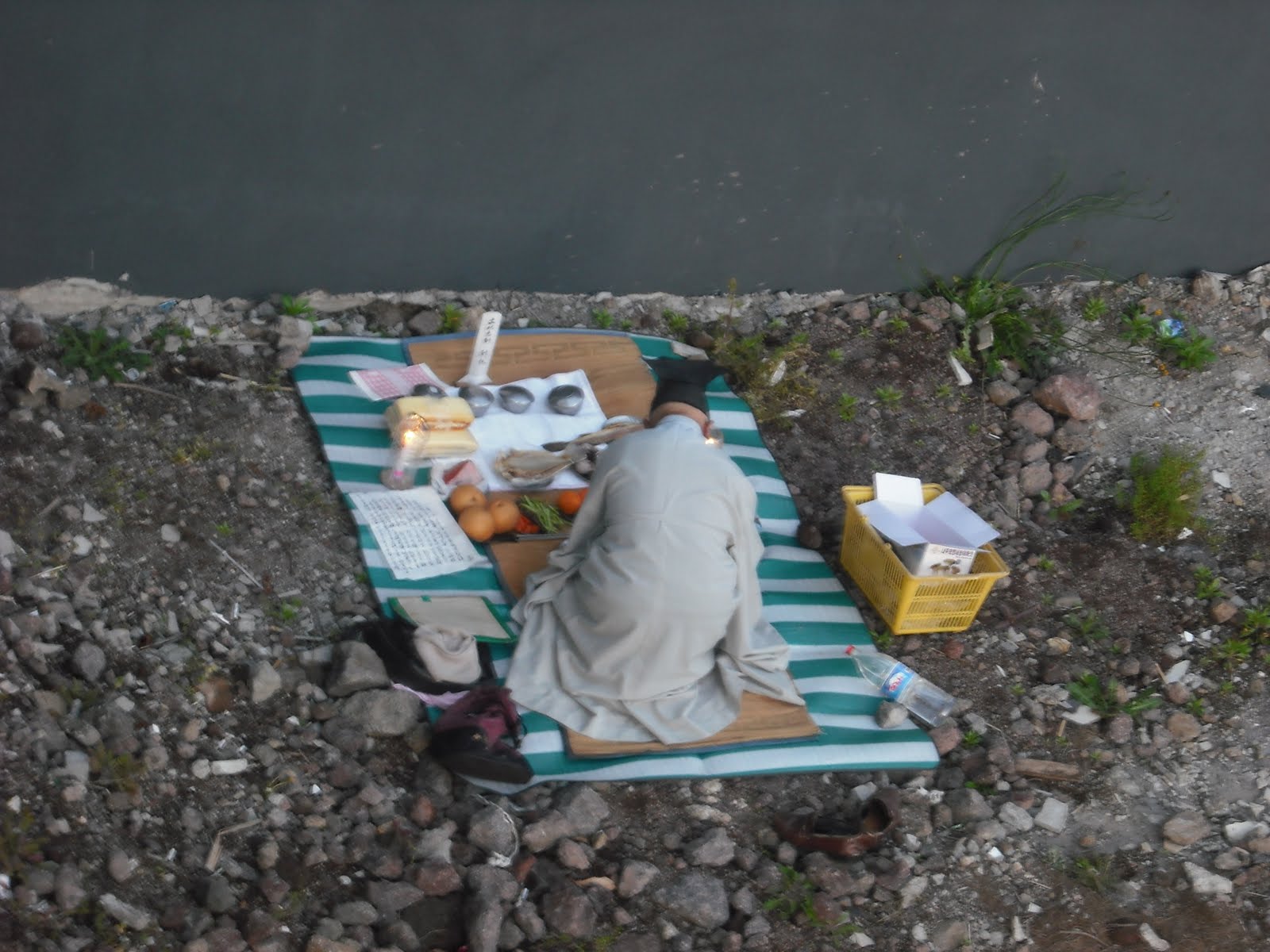
A shaman doing shaman things
Seogwipo, Jeju island, April 13, 2010 
  Very strong northwesterly winds and sunny fresh weather in Seogwipo. One male Ashy Minivet was seen in a Seogwipo park, in almost the exact same spot where three were seen last year (April 18, 2009). It was very approachable, as it fed on caterpillars and flowers next to a stream. It made a distinct rapid trilling 'sheee-reeep' call. Numbers of Pale Thrush in the park seem to have swelled to about a dozen, with at least three Brown-headed Thrush also seen. A gang of about a dozen skittish Dusky Thrush remains in the park. Several Olive-backed Pipits and White-cheeked Starlings were also spotted. West of town, a male Blue-and-white Flycatcher (this one a cyanomelana) fed next to a dry riverbed. Barn Swallows have become noticeably more plentiful, with clouds of 20-30 seen above most fields and areas with water.

(*Note: This is a “historical post.” Whereas I started birding in Korea in 2005, this blog has only been active since early 2012 - these posts are an attempt to consolidate my early birdventures from the various blogs and websites where they reside, largely from the “Archived Bird News“ section of Birds Korea’s excellent website: http://www.birdskorea.org/Birds/Birdnews/BK-BN-Birdnews-archive.shtml. Find more historical posts by clicking on the "Historical posts" tab at the bottom of this post.
  For this post, most of images are lamentably poor-resolution screensaves, as many of the original photo files were lost in the infamous computer crash of 2011.)