Sunday, January 30, 2011

"Historical post" - Jeju Island, January 2011

Jeju - "The Hawaii of Korea." Snowbound Ojori, on the east coast near Seongsan
Magical soup Youngho introduced me to - perfect for reviving frozen birding zombies
Black-faced Spoonbill Platalea minor
Common Starling Sturnus vulgaris - not common in Korea
 Bird News from Matt Poll and Youngho Kim, Jeju island, January 30, 2011
  Another weekend of blizzard-like conditions on Jeju. In a fallow field near the coast, about 50 Buff-bellied Pipits foraged. At Hado, one of the overwintering Black-faced Spoonbills was seen uncharacteristically close to the road. Aside from the regular assemblage of winter waterfowl, 93 Bean Geese, a dozen Dusky Thrush, a Naumann's Thrush, and three personata Black-faced Buntings were also at Hado.
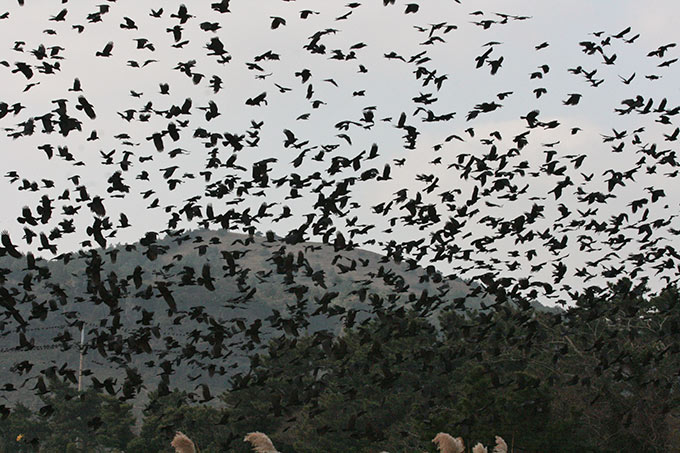
  Near Kyorae, I was happy to finally catch up with about 30 Common Starlings that regularly overwinter there. Several hundred Rooks were spotted nearby.


1st winter Glaucous Gull Larys hyberboreus
Bird News from Matt Poll, Youngho Kim, and Stephen Krohn
Jeju Island, January 15, 2011

  In spite of Blizzard-like conditions on Jeju, we had a great day of birding along the northeast coast. In a golf course pond, perhaps 200 Mandarin Ducks huddled on the bank. Along the coast, several Dunlin, Kentish Plover, Common Sandpiper, Little Grebe, and White Wagtails were seen. Four Black-necked Grebes braved heavy surf, while a nearby assemblage of more common gulls held a Heuglin's Gull, as well as a Glaucous Gull. A Common Goldeneye bobbed in a small harbour. A Western Osprey, a Rook, and a half-dozen Carrion Crow (which favor a small stretch of northeast coast) were also seen on the drive down the coast.
  Smaller numbers of ducks were seen at Hado, when compared to the previous two Januaries. About 20 Common Shelduck, a like number of Northern Shoveler, a hundred Spot-billed Duck, a similar number of Pochard, 50 Mallard, two dozen Northern Pintail, and several Eurasian Teal, Gadwall, and Tufted Duck were seen there. Also at Hado were the 15 overwintering Black-faced Spoonbills, several dozen Coot, and about 20 Northern Lapwings.
  Further down the coast near Seongsan, four Falcated Ducks, several more Northern Pintail, Pochard, Common Goldeneye and Northern Lapwing, about a dozen Common Mergansers, and a possible Northern Harrier. There has been a noticeable lack of loons on Jeju this winter.
  

Halla Mountain, South Korea's tallest at 1,950m
Hanon Crater in Seogwipo
South coast
Eurasian Magpie Pica pica with Greater Spotted Eagle Clanga clanga
Heuglin’s Gull Larus heuglini
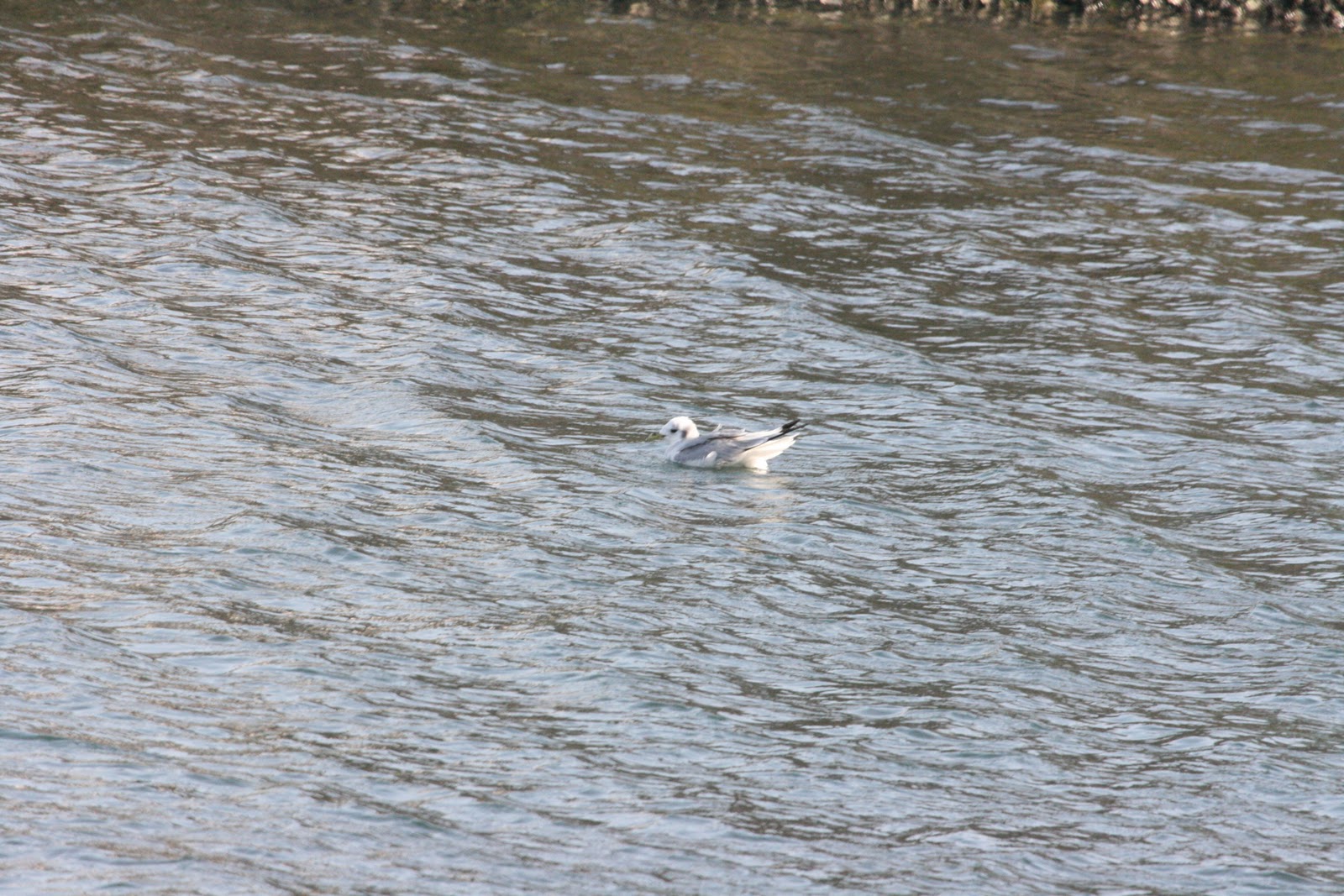
Black-legged Kittiwake Rissa tridactyla
Northern Lapwing Vanellus vanellus
Mandarin Duck Aix galericulata
  Earlier in the week in Seogwipo (MP only), a riverside park held about 50 Mandarin Ducks, a dozen Pale Thrush, two dozen Dusky Thrush, a White's Thrush, a female Red-flanked Bluetail, several Daurian Redstarts, while plentiful Great Tits and Japanese White-eyes made the bushes come alive. There has been a Eurasian Siskin explosion on Jeju this winter. In 2009, I saw none, in 2010 I spotted several, whereas this year I have noticed large flocks (40+) in several locations.
  A Black-legged Kittiwake and three dead and oiled Black-throated Loons were spotted in the harbour.
  In a farmer's field at Hanon Crater, a massive Greater Spotted Eagle lazily fled from the relentless attacks of a Eurasian Magpie. An Eastern Buzzard also glided over the field.

(*Note: This is a “historical post.” Whereas I started birding in Korea in 2005, this blog has only been active since early 2012 - these posts are an attempt to consolidate my early birdventures from the various blogs and websites where they reside, largely from the “Archived Bird News“ section of Birds Korea’s excellent website: http://www.birdskorea.org/Birds/Birdnews/BK-BN-Birdnews-archive.shtml. Find more historical posts by clicking on the "Historical posts" tab at the bottom of this post.
  For this post, most of images are lamentably poor-resolution screensaves, as many of the original photo files were lost in the infamous computer crash of 2011.)

Sunday, January 16, 2011

Featured article for The Jeju Weekly, January 16, 2011

Western Osprey Pandion haliaetus
The Oreums (volcanic hills) of Jeju
  After writing the Mara-do article, I was cajoled into writing a longer piece for The Jeju Weekly. The highlight was getting to interview Kim Eunmi and Kang Changwan at the Jeju Wildlife Centre, who had a sobering view on development and conservation on Jeju Island. Here's the article, and the original link:
http://www.jejuweekly.com/news/articleView.html?idxno=1189

Jeju’s avian habitats under threat - Olle, golf courses, and other tourist staples may dissuade endangered fowl from wintering here
  Jeju Island is a stunningly beautiful place; anyone who’s been there can attest to that. The local flavor of the people, landscape, wildlife, and flora combine to produce an iconic and singular corner of Korea that millions flock to every year. Unfortunately, much of this natural beauty is under threat from aggressive development based around the tourism industry. I talked about the threats facing Jeju’s natural heritage with Kang Changwan and Kim Eunmi at the Jeju Wildlife Research Center (JWRC), where they work monitoring wildlife migration and habitats.
  The Jeju Wildlife Research Center was started in 2003 by bird lovers uniting to share a common passion and by 2007 the center had incorporated the knowledge of several fields and experts, combining research on Jeju’s birds, mammals, insects, reptiles, amphibians, and vegetation. Their common goal is the protection of habitat for all of Jeju’s wildlife.
  The Center is not an activist group that fights for habitat by butting heads with officials or those that have a financial interest in Jeju’s wild habitats. Rather, they fight for Jeju’s wildlife and threatened habitats by steadily building up a body of solid scientific data about the effects of development and offering their expert opinions on the issue.
  One important tool for protecting Jeju’s threatened wetland habitats is the Ramsar Convention on wetlands. The Ramsar Convention is, in the words of its Web site, “an intergovernmental treaty that embodies the commitments of its member countries to maintain the ecological character of their Wetlands of International Importance and to plan for the ‘wise use,’ or sustainable use, of all of the wetlands in their territories.”
It would seem natural for Jeju residents to be supportive of protecting local wetland habitats under Ramsar. Unfortunately, many locals and many in the Jeju government are not generally in favor of having threatened habitats protected or recognized by Ramsar.
  The Jeju government wants to develop Hado, a prime location for thousands of overwintering migratory birds, by building more hotels and a ‘water sports complex.’ At nearby Ojori Lake, also a key overwintering spot, there are similar development proposals. An ill-advised plan is on the books to divide the area into three equal parts – one for birds, one for hotels, and one for a speed boat course.
  This idea makes very little sense from a conservation standpoint but a lot of sense from a financial one. The JWRC suggested that the vital bird habitats of Ojuri and Hado would be much easier to protect if they weren’t largely privately-owned. There is often little that can be done to prevent private land-owners from developing (some might say destroying) pristine habitat to make a profit.
  Jeju’s Gotjawal forests, known as the “The Lungs of Jeju,” have remained untouched by development for many years due to their rocky composition. The forests are scattered around the island and are home to many threatened and unique bird species like the Fairy Pitta and the Black Paradise Flycatcher, as well as a unique variety of other wildlife and vegetation.
  The Jeju government wants to develop Hado, a prime location for thousands of overwintering migratory birds, by building more hotels and a ‘water sports complex.’ At nearby Ojori Lake, also a key overwintering spot, there are similar development proposals. An ill-advised plan is on the books to divide the area into three equal parts – one for birds, one for hotels, and one for a speed boat course.
  In addition, the spongy aquifer that underlies the Gotjawal forest is the sole source of water for 500,000 Jeju residents. This aquifer also qualifies the Gotjawal Forest for recognition as a crucial wetland that should be protected under Ramsar, and there are several groups fighting to help make this happen.
  Yet the battle to keep developers away from Jeju’s Gotjawal forests is an uphill one. Besides the fact that a confusing dispute between governmental departments is underway over how best to conserve the Gotjawal forests, much damage has already been done. Several golf courses have been built in former Gotjawal forest areas, and the Kyorae Gotjawal is under imminent threat from a new golf course that has just been approved by the provincial council. Additionally, an MBC drama shot in Kyorae Gotjawal proved to be very destructive to the forest.
  A poignant symbol of Jeju’s threatened wetlands is the Black-faced Spoonbill. With its large spatulate bill and gangly gait, the Spoonbill is a strangely majestic bird and has been recognized as Korea’s National Monument No. 205. The Black-faced Spoonbill is also endangered, with an estimated worldwide population of perhaps less than 2,400. Spoonbills that inhabit the wetlands of Jeju’s northeast coast are the only ones that regularly rest and overwinter in Korea. As such, their habitat is in need of protection.
  Kang Changwan of the JWRC is very worried about the current situation of these crucial habitats, and his organization has been monitoring them closely. In 2009, the Olle trail that wends its way through the Seongsan area was found to be disruptive to Black-faced Spoonbills that roost nearby.
  In an effort to mitigate disturbance to the overwintering birds, many signs and fences warn Olle hikers to stay out of these areas.
  Despite this, a large percentage of Olle hikers disregard the warnings and tramp through sensitive areas, repeatedly spooking waterfowl, including the spoonbills.
  Many birds, including spoonbills, are extremely sensitive to repeated disturbance, and the stress can cause them to leave their roosts. Researchers have seen a shift in the number of Spoonbills staying near the trails as a result of the disruption caused by the Olle hikers. The Spoonbills have been favoring smaller and less ideal sites nearby, sites that aren’t subject to as much human intrusion as their favored habitat.
  The JWRC feels that if the Olle in question remains operating as it is, the Black-faced Spoonbill could very well disappear from Jeju for good. The Center initially requested that the Olle be temporarily closed during the crucial October to April winter roosting period, but after further research they now feel that the route will have to be changed, or the Spoonbills could be disturbed to the point where they won’t return.
  Kang feels that many of the Olle trails were set up too quickly, with little environmental consultation beforehand. He believes that some of the trails and the human traffic they attract are contributing to habitat destruction in many areas, and he wants people to keep asking tough questions about the trails and about what the term ‘environmentally friendly’ actually means.
  Olle trails were created with the admirable goal of helping people slow down and enjoy Jeju’s natural beauty. If the Olle trails are really to be one of Jeju’s strengths, a better way of keeping the rising numbers of Olle hikers out of off-limits areas and increased coordination with groups such as the JWRC, are necessary.
  Jeju is an island that lives and breathes tourism and has been so for some time. That is never going to change, but surely a balance can be reached. ‘Slowing down’ is definitely a notion that should be heeded when it comes to development on Jeju. Money talks, but in the long run, building speed boat tracks and more golf courses on Jeju doesn’t seem as important as keeping Jeju beautiful.
  I asked Kang if he was hopeful or pessimistic about the future of Jeju's species and habitats that are under threat from development. I asked him if he was worried that when his young son grows up, he would ask questions about pictures of birds, and indeed of a Jeju that no longer exists.
  He took a deep breath and looked out the window of the Wildlife Center at Jeju’s impossibly green and rolling hills for a long and quiet minute before giving me his answer with a downcast look. I didn't need the translation.

Monday, December 27, 2010

"Historical post" - Jeju Island, December 2010

Blizzard in Seogwipo 
Moments before I tripped over my first Eurasian Woodcock


Seogwipo, December 27, 2011
  After being dreadfully bed-ridden for a few days, I ventured out a few days after Christmas, to test out my rubberlegs. I wandered through some of Seogwipo’s lovely coastal parks, and ended up almost tripping over a bedraggled Eurasian Woodcock, my first, in the blizzard.
  Here were my thoughts at the time, as they were:
  Snowing everywhere in the world it seems. Yesterday I woke up a human again, and not a wretched creature that lives on the toilet, and groans and grunts to itself all day. Yuk. Lost a few pounds though, always makin' lemonade. So I ventured out of my stuffy hovel and into an awesome little Seogwipo blizzard along my favourite backroads. My lips numbed. It was good. Still not 100%. I had a revelation while fevered and sweaty under my blankets for three days - when you're hallucinating heavily, anything that's on TV seems pretty good.


Waterfowl assemblage at Ojori
Rook Corvus frugilegus
Common Snipe Gallinago gallinago
Eastern Buzzard Buteo japonicus
Buff-bellied Pipit Anthus rubescens
Dusky Thrush Turdus eunomus
Pale Thrush Turdus pallidus
Bird News from Matt Poll and Youngho Kim, Jeju island, December 12, 2010
  A crisp but pleasant day for coastal birding on Jeju. Along the coast near Sehwa, several Red-breasted Merganser, two dozen Temminck's Cormorant, and eight Buff-bellied Pipits. At Hado, 12 Black-faced Spoonbill grouped with about twice as many Great Egrets. The winter ducks have arrived in force - 12 Common Shelduck, 70 Mallard, several hundred Spot-billed Duck, about 200 Gadwall, a similar number of Eurasian Wigeon, and about a hundred Tufted Duck. Also at Hado were perhaps 60 Coot and 16 Northern Lapwing.
  At Ojori Lake a similar numbers of ducks, with the addition of a dozen or so Pintail, a half-dozen Pochard, 15 Shoveler, and nine Falcated Teal. Near Seongsan, the sky was darkened by two massive clamours of Rooks, the two totaling probably 3,000 birds! At one point hundreds of Rooks mobbed an Eastern Buzzard mercilessly, and it was definitely a spectacle. Three more Eastern Buzzards were seen during the day, as were three Common Kestrel, three Western Osprey, and a Peregrine Falcon. At Ojori, 16 more Black-faced Spoonbill huddled. One of them had a white ring on its left leg, and Youngho suspects it was ringed in Siberia.
  Earlier in the week, a Seogwipo park held a half dozen Pale Thrush, a similar number of Dusky Thrush, about two dozen Eurasian Siskins, and a Common Snipe. In a nearby park, I saw a Naumann's Thrush - the first time I've seen one on Jeju. About two dozen Mandarin Ducks were spotted on a quiet stretch of river.


Hanon crater
Seogwipo's harbour
Further east in the harbour
One of Jeju's ubiquitous citrus orchards

Little Grebe Tachybaptus ruficollis
Northern Pintail Anas acuta
Olive-backed Pipit Anthus hodgsoni
(*Note: This is a “historical post.” Whereas I started birding in Korea in 2005, this blog has only been active since early 2012 - these posts are an attempt to consolidate my early birdventures from the various blogs and websites where they reside, largely from the “Archived Bird News“ section of Birds Korea’s excellent website: http://www.birdskorea.org/Birds/Birdnews/BK-BN-Birdnews-archive.shtml. Find more historical posts by clicking on the "Historical posts" tab at the bottom of this post.
  For this post, most of images are lamentably poor-resolution screensaves, as many of the original photo files were lost in the infamous computer crash of 2011.)

Saturday, November 27, 2010

"Historical post" - Jeju Island, November 2010


Youngho leads the way to the Rosy Finch cliffs
A refreshing ankle-deep icewater soak was necessary, but it was worth it
Asian Rosy Finch Leucosticte arctoa
Little Grebe Tachybaptus ruficollis
Striated Heron Butorides striata
Common Sandpiper Actitis hypoleucos
 Bird News from Matt Poll and Youngho Kim, Jeju island, November 27, 2010
  At the base of remote grassy cliffs on Jeju's west coast, two Asian Rosy Finches were spotted when they braved extremely strong winds and came down to drink trickling fresh water. Earlier in the day, Youngho saw about 30 Asian Rosy Finches in the same spot, and last week one of Youngho's friends saw as many as 180 on these cliffs. At Yongsu, two Bean Goose, a dozen Coots, and about 150 Spot-billed Ducks and Mallards. Along the west coast, several Little Grebes, Common Sandpipers, five Pintails, 50 more Spot-billed Ducks, as well as an Osprey and a Peregrine Falcon.
  After parting ways with Youngho, I spotted several Olive-backed Pipits, a dozen Hawfinch, and several Pale Thrushes in a hilltop park in Seogwipo. In another park, a Striated Heron has been seen in the same spot on a small river for the third winter in a row. Also in the park was a female Pintail, two dozen Mandarin Ducks, and a circling Northern Goshawk.
  And here’s how I reacted at the time, candidly:

  This bird is super rare here, it's been seen less than ten times in Korea. On Saturday afternoon my Korean birding buddy tipped me off about the finch, and I jumped on old whitey and scooted out to meet him near Sanbangsan on the southwest coast. The scoot out woke me up - it was super windy, and I was fighting hard not to get blown into adjacent lanes by the robust gustiness. Once I met up with Youngho, we drove up to a remote cliff on the west coast. We had to scale down this insane cliffside using a haggard old crumbling path. Once at the bottom, we stared up at the cliff for ages, hoping to get finch-lucky. What didn't help was the fact that the tide was all the way in, which meant frigid ankle-deep seawater every few seconds. Also unhelpful, vis-a-vis trying to find the birds were the gale force winds. Woke my ass up even more though. After ages, two of the elusive pinky finches came down for a drink. I about lost my mind. I crept up and got a few decent shots. High fives! Happy happy day. I have a headache.


Red-flanked Bluetail Tarsiger cyanurus
Mandarin Duck Aix galericulata
Eurasian Magpie Pica pica
Daurian Redstart Phoenicurus auroreus
Chinese Pond Heron Ardeola bacchus
Seogwipo, Jeju Island, November 16, 2010
  A crisp sunny day for a walk through my patch of parks in Seogwipo. The first few Jeju winter specials were spotted in a riverside park - several furtive Pale Thrush, a foraging Red-flanked Bluetail, several Japanese Bush Warblers, a Grey Wagtail, and numerous Japanese White-eyes were seen. On the river, about 25 Mandarin Ducks mingled with a like number of Spot-billed Ducks and six Little Grebes in winter plumage, while a smartly-marked Eurasian Magpie scolded me from a nearby tree. Also in this park were several Great Tits, a Daurian Redstart, and a White-backed Woodpecker.
  A Chinese Pond Heron crept through a nearby field. This is the second Chinese Pond Heron in winter plumage I've seen on Jeju in the past two years - perhaps they're expanding their winter range northwards?


(*Note: This is a “historical post.” Whereas I started birding in Korea in 2005, this blog has only been active since early 2012 - these posts are an attempt to consolidate my early birdventures from the various blogs and websites where they reside, largely from the “Archived Bird News“ section of Birds Korea’s excellent website: http://www.birdskorea.org/Birds/Birdnews/BK-BN-Birdnews-archive.shtml. Find more historical posts by clicking on the "Historical posts" tab at the bottom of this post.
  For this post, most of images are lamentably poor-resolution screensaves, as many of the original photo files were lost in the infamous computer crash of 2011.)