Wednesday, March 13, 2019

Flashback alert…Eocheong Island, May 14-16, 2013

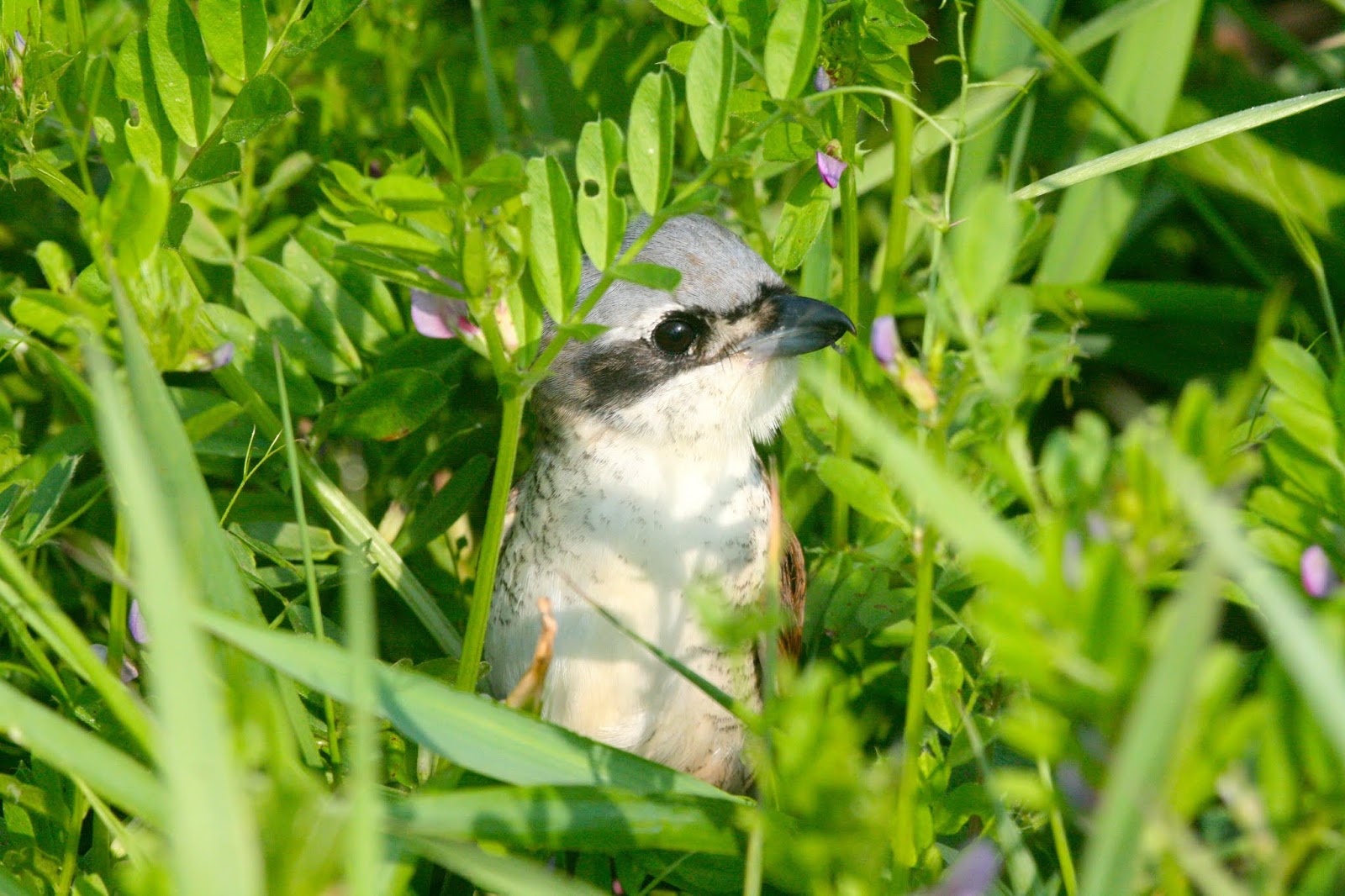
Tiger Shrike Lanius tigrinus
Brambling Fringilla montifringilla
Yellow Wagtail Motacilla tschutschensis tschutschensis…or perhaps plexa/thunbergi…or is it macronyx x tschutschensis…and what it simillima...argh, wagtails…
(probable) Two-barred Warbler Phylloscopus plumbeitarsus
Yellow-breasted Bunting Emberiza aureola
(A critically endangered species...see them now before they're gone...)
Narcissus Flycatcher Ficedula narcissina
Mugimaki Flycatcher Ficedula mugimaki
male Yellow-rumped Flycatcher Ficedula zanthopygia
female Yellow-rumped Flycatcher Ficedula zanthopygia
White-throated Rock Thrush Monticola gularis...I swear...
Eocheong on the horizon
Bustling downtown Eocheong
Eocheong's harbour
The morning fog rolls over the main town
The lighthouse (1894)
My roommate
The hills of Eocheong...stripped of trees for a reason I now forget
Snack shack/ferry terminal
Heading back on the ferry to Gunsan
Creepy dawn wakeup music over the loudspeakers 
  
  In the spring of 2013, I finally got the opportunity to bird Korea’s Yellow Sea islands in spring. The epic trip started on Gageo Island in late April, and ended with Baekryeong Island in late May. Lost in the middle, I spent a few days on Eocheong Island, a stay extended by a ferry cancellation. The truly spectacular birding that bookended the month overshadowed Eocheong in my mind, which wasn’t fair. The birding on Eocheong was, by most standards, also spectacular. For some reason, I never ended up blogging about my time there…so here it is, hopefully better late than never.
  The feel of Eocheong could best be characterized as…gruff. My trademark ice-breaking goofy smiles were met with stares, muttering, and doors being slowly closed. The island was relatively unbirded until it blew up in the early/mid-2000s, largely as a result of the impressive array of migratory birds discovered there on the regular by certain folks. A few years back, however, the island seems to have fallen out of favour as a birding destination. Or has it? Maybe I don’t know what I’m talking about, I’m kinda out of the loop on the Korean birding scene gossip. Pay me no heed.
  Accommodation on the island was spartan, and was shared with massive spiders that had a preference for hanging out in shoes. I have no recollection at all of eating while there, which makes me think I mostly ate packaged crap out of the little snack shack.

  In the wind and sun of May 14th, my first day on Eocheong, 33 species were logged (very low number for the time of year). A hepatic Common Cuckoo was a treat to observe, as was a confiding Tiger Shrike, and five Ashy Minivets, which I picked through carefully (you never know, eh?). Towards late afternoon, a rich vein of buntings percolated through a scrubby ditch area at the base of a hill near the school (3 Yellow-browed, 5 Chestnut, 4 Japanese Yellow, 4 Little, 6 Black-faced).

  It was foggy and windy on May 15th, with 33 species counted again. Single-digit numbers of a nice variety of flycatchers (2 Asian Brown, 1 Mugimaki, 2 Yellow-rumped, 1 Narcissus) and buntings (1 Tristram’s, 4 Yellow-breasted, 4 Chestnut, 4 Little, 8 Black-faced) in the hills around the harbour.
  Best of the day was my first White-throated Rock Thrush, spotted near the old (1894) lighthouse on the north point. Very quick looks, but still – an outstanding bird that I had long since given up all hopes of seeing. Until I saw one. A puzzling Yellow Wagtail and three Rufous-tailed Robins rounded out the day.
  
  May 16th was a ‘bonus’ day on Eocheong, owing to a ferry cancellation. The highlight, and lowlight, was coming around a trail corner and almost stepping on another White-throated Rock Thrush. We eyeballed each other in shock for a few moments, before it flew across a small ravine and perched for several seconds before vanishing. Flycatchers (4 Asian Brown, 1 Mugimaki, 2 Yellow-rumped, 1 Narcissus) and buntings (2 Tristram’s, 4 Chestnut, 2 Little, 6 Black-faced) were still around, with small numbers but respectable variety. I puzzled over a tricky Phyllo warbler…it was probably a Two-barred Warbler, but who the hell knows, right?

  Audacious plans are afoot to revisit plucky Eocheong (and other islands) this spring – in a big way. That is all I can reveal for now. Spring is almost upon us, fellow bird-nerds – clean those bins and bone up on those rarities in your field guides. I smell birds in the wind!
Sunday, March 10, 2019

Vernal Grumblings II – Gangneung, March 8-10, 2019

Koreas, now and then
Part of a huge cloud of (mostly) Black-headed Gulls, put up by an Eastern Buzzard
Mandarin Duck Aix galericulata
Falcated Duck Anas falcata
Eastern Spot-billed Duck Anas zonorhyncha
Great Crested Grebe Podiceps cristatus
Black-headed Gull Chroicocephalus ridibundus
Ring-necked Pheasant Phasianus colchicus
Eastern Buzzard Buteo japonicus
Red-billed Starling Spodiopsar sericeus, with two White-cheeked Starling Spodiopsar cineraceus (look for white rumps and unspotted wings)
Japanese Wagtail foraging
(Note: videos play clearer on the second play)

  Smoggy and mild on the Namdae River on March 8th, with more signs of the seasonal change that is slowly spooling up. Two Great-crested Grebes attired in smart breeding plumage were already engaging in their gentle courtship dance. A pair of Falcated Ducks foraged mid-river – my first sighting of a breeding-plumaged male in Gangneung (at least I have no problem IDing those, ha ha). Only a handful of Eurasian Coots left at the river mouth, and nearby, several Pallas’s Reed Buntings, most on their way towards breeding plumage. There was a bump in PRB numbers a couple of weeks back. Still large numbers of Black-headed Gulls (700+), with some showing the first signs of their namesake breeding hoods. 

  The following day at Gyeongpo Lake, a full circuit of my favoured spots turned up 46 species in three hours. Finally, a day with no smog! It’s a grim state of affairs when a day of breathable air is something to write home about. The air quality in Korea wasn’t anywhere near this horrific just a few short years ago, not even close. Whinge whinge whinge.
  Large numbers of Common Pochard (650+) were crowding up on the lake, with overflow spilling out onto ancillary waterways. Got good looks at a Ring-necked Pheasant while searching for a vanishing Dusky Thrush. No sign of last week’s Japanese Bush Warbler, perhaps there were too many noisy park visitors in its formerly quiet corner of the park. It did seem to be an exceedingly shy and skulky bird.
  Grey-capped Greenfinch were seen to be flocking up more than earlier in winter, with a group of 60+ being the largest. A lone Hawfinch confused me for several minutes, until I secured a brief view of its stonking great big bill. A ripple of at least 110 Far Eastern Skylark over the fields seemed geographically restless.


  I walked the river on March 10th, and was met with stout wind and fresh air in the morning that succumbed to showers and, you guessed it, smog in the afternoon. The river had risen noticeably from just two days earlier, most likely swollen with snowmelt.
  A pair of Mandarin Ducks was sighted on the stretch near my house, and was shortly followed by a pair of Falcated Ducks. Two 
Long-billed Plovers were also notable on this section of river. A flight of at least 90 Red-billed Starlings wheeled along the river with two White-cheeked Starlings folded in. I spotted them at a point about 45 minutes (on foot) away from my neighbourhood – I guess that’s where they’ve gone! Perhaps there are more fruit trees around there, as the ones in my area have been pretty well eaten out.
  Common Gull numbers were way down, from hundreds last month to just a handful. The ranks of Black-headed Gulls, on the other hand, have more than doubled in just two days, with a conservative count of 2,100 near the river’s mouth.
  Hmm, I haven’t seen any Northern Lapwings since February 23rd.

Vernal Grumblings

Over the hill and round the bend from my place
Azure-winged Magpie Cyanopica cyanus
Azure-winged Magpie Cyanopica cyanus 
(getting after the sun-dried persimmons)


female Yellow-throated Bunting Emberiza elegans
male Yellow-throated Bunting Emberiza elegans

Yellow-throated Bunting foraging

White-cheeked Starling Spodiopsar cineraceus
Korean (Gensan) Salamander Hynobius leechii
  Things are changing out there. Maybe the spring birds haven’t arrived yet, but a good proportion of birds I’ve observed lately were acting ‘spring-y,’ if that makes any sense. Changes in numbers, distribution, behaviour…spring-y.
  The hills behind my house were buzzing with an uptick in such frenetic bird activity on March 7th. I usually struggle to crack the dozen species mark in these hills, but I recorded 24 species on a relatively short circuit in the morning rain and smog.
  These included species I hadn’t encountered in ‘my backyard’ yet, such as Siberian Accentor and White-cheeked Starling, and species that were seen in much higher numbers than usual for the site, like Goldcrest and Azure-winged Magpie. Numbers of the latter species were quite confiding, feasting on what’s left of the persimmons. It’s always a treat when I get to observe this charismatic bird, which has an oddly disjunct range (East Asia and Iberia).
  On the way out I examined a dead Korean Salamander (thanks to 
Dr. Amaël Borzée for the ID help) on a small road, under the watchful eyes of a Bull-headed Shrike. Poor feller, I’m sure we'll meet again in Salamander Valhalla. Wait, now I’m concerned that I’m destined to end up in Salamander Valhalla. Ah well, I’m sure there’s no smog there, so it’s all good.

Monday, March 4, 2019

Winter Wane II – Gangneung, February 27–March 3, 2019

Testing out my new line of mobile birding blinds. Order yours today!
Natural scrub-lined ditches being dug out and replaced with concrete death traps
Oh sweet, the air quality today is 'devil'
Northern Pintail Anas acuta
Common Pochard Aythya ferina
Greater Scaup Aythya marila
Eurasian Wigeon Anas penelope
Eurasian Magpie Pica pica
Daurian Redstart Phoenicurus auroreus
Sing n dash

  On a fresh February 27th, a Meadow Bunting, still a skulky Japanese Bush Warbler, and only one Dusky Thrush at Gyeongpo Lake. A restless plump of 14 Greater White-fronted Goose was perhaps an early sign of spring. Goodly numbers of waterfowl still lounged on and around the lake.
  Two days later, it was hazy and quiet in the Daegwalyeong hills north of town. Best were a Hazel Grouse and 30+ Rustic Buntings.
  The following day, still hazy and warm down the coast at Jongdongjin, where a North Korean submarine ran aground in 1996. No periscopes offshore on this day, just a pair of Black-necked Grebes and a lone Red-throated Loon drifting near 15+ Arctic Loons.
  On March 3rd, a return to Disappointment Valley in the warm haze. Nothing much of note all in the hills, apart from a sprinkling of tits and buntings.

Sunday, March 3, 2019

Winter Wane – Gangneung/Gangwon February 20–24, 2019

Sokcho
Fake plastic trees
Tim scanning gulls at Ayajin
Tim standing on what used to be a rocky stretch of Brant Goose habitat
Northern Shoveler Anas clypeata
Buff-bellied Pipit Anthus rubescens
Naumann’s Thrush Turdus naumanni
Cinereous Vulture Aegypius monachus
Eurasian Kestrel Falco tinnunculus
Eurasian Kestrel in a hover

  Habitat loss, outrageous smog levels, unseasonably warm weather, and profound unbirdiness have been the four thematic pillars of birding in Gangneung for the past few weeks. When I leave this country, I sure won’t miss birding in a mask, or the dirty heat of a layer of smog coating my face. And I will never take clean air for granted again, that is for damn sure.
  On all birding days, the weather was in the low double digits – feels like winter is done. That snuck up on me, as I still have some winter birds I need to catch up with. Ah well, I guess I can blame that on the fact that I sleepwalked my way through January, obsessed with that Black Woodpecker. I regret nothing. Looking out the window now, buds are visible on most trees. I wonder if all of this means an early spring, birdwise…
  On February 20th, notable at Gyeongpo Lake were single examples of Cinereous Vulture, Green Sandpiper, Buff-bellied Pipit, and Japanese Bush Warbler. Two days later at the lake, in deteriorating air conditions, an uptick in thrush activity got my attention. At least four Dusky Thrush and a few Naumann’s Thrush lurked in the scrubby wooded area around some canals. Skulky buggers. I’ve only seen one Dusky Thrush there all winter – is this a sign of early spring movement, or just wintering birds roaming as their favoured fruit trees get depleted? A hovering Eurasian Kestrel and a squad of five Siberian Accentors were also memorable.
  The following day, I walked the Namdae River in the morning smog. I got good looks at a Northern Shoveler that I originally had pegged as a female. It turned out to be a male coming out of eclipse plumage (yellow eyes), or “supplementary sub-eclipse plumage,” or whatever it’s called.
  On the 24th Tim rolled into town and we bussed it up to Sokcho, then points further north. It was smoggy as all get-out, but the smog didn’t seem to bother Tim much, guess he’s made of stiffer stuff. After a spot of seawatching and a lovely breakfast of Korean stew, we headed up to Ayajin in search of Brant Goose. Up until fairly recently, the quaint port used to be reliable for the rare species, which favoured the rocky western flank of the harbour. Black-legged Kittiwake, Sanderling, and a motley collection of other sea-going waterfowl also could be found in the harbour.
  Unfortunately (but perhaps predictably), since Tim’s last visit, this entire area of rocks had been walled off, drained, and filled in with concrete. The reclaimed land now features a shiny new picnic area with park benches and rubberized floor cladding, and a convenient place for drunks to erect tents. Completely pointless, but let’s keep those lads pouring concrete, innit, it’s what makes the world go round. It goes without saying there were no Brant Geese there, as those rocks are now buried under ten feet of concrete. There weren’t any around the corner and down the coast either, as the coastal rocks there that may have provided secondary refuge to the shy species were teeming with weekenders playing at fishing – guests of the row of new hotels on the ocean road catering to such activity.
  We retreated into the hills to nosy around the scrubby hills where Ural Owls were once reputed to haunt. Much of the narrow wooded trail network had also been altered for the worse since Tim last visited, this time with extensive clearing of vegetation and conversion of wild fields into flat gravel lots. Tim seemed to be in a daze, checking if his memory had failed him, or if it really all had been destroyed.
  Apologies if I come off as a salty, embittered curmudgeon, but it’s hard to hang in there and remain bright-eyed and bushy-tailed when the dual themes of malignant habitat loss and air pollution truncheon me over the head with every trip out of doors. Humbug.
  The lake at Sokcho was dead quiet in the haze, with Tim noting more habitat loss since his last visit – a lengthy tract of reeds has been replaced by a kayak dock. A lone Greater White-fronted Goose rested with several Mallards and Spot-billed Ducks.
  Doom and gloom aside, it was awesome to bird with Tim. We puzzled over yellow-legged Vega Gulls, and leapfrogged our way up and down the east coast, jumping off buses whenever the harbour out the window looked promising.
  On a side-note, on returning to my neighbourhood I saw my first handful of Red-billed Starlings since late December. Perhaps they’re also wandering as the persimmon trees in the area are denuded?