Tuesday, November 17, 2015

Suncheon, October 26 – November 15, 2015

Hen Harrier (Northern Harrier) Circus cyaneus
Long-eared Owl Asio otus
Peregrine Falcon Falco peregrinus
Chestnut-eared Bunting Emberiza fucata
Eurasian Spoonbill Platalea leucorodia
  On the chilly morning of October 30th, countable Hooded Cranes numbered about 250, with 14 Eurasian Spoonbills nearby. Yellow-Throated Buntings have arrived at the bay, with a half-dozen active individuals being the first I’ve noted at this site.
  The following day, more than 400 Hooded Cranes could be seen, and a reddish Eastern Buzzard feeding in a field was my first of the season. Several Heuglin’s Gull were mixed in with more numerous Vega, Black-headed, and Black-tailed Gulls, and a restless flock of at least 20 Grey-capped Greenfinch was seen circling the area.
  The morning of November 3rd was a grim one at the bay, with hazy skies and ever-expanding construction destroying yet more habitat. Aside from the two huge ‘pit’ sites, the wonderful reedy/scrubby ditches among the rice fields are being systematically ripped up, with the natural banks being replaced by concrete blocks. Notable bird sightings included 30+ Far Eastern Skylarks seen or heard, nine Whooper Swans, 400+ Hooded Cranes, now 12-15 Yellow-Throated Buntings claiming a narrow stretch of coastal scrub, and nine White-Cheeked Starlings in a nearby village.
  Three days later, the highlight was a Eurasian Bittern lazily flushing from its favored ‘froggy’ spot. A Hen Harrier drifted lazily near a meowing Northern Lapwing in a rice stubble field - this was the first I’ve seen of both species this autumn. Nearby, three Chestnut-eared Bunting were being closely watched by a Peregrine Falcon, and I noted my first four Pallas’s Reed Buntings since spring.
  On November 12th at a hilly reservoir close to my apartment, some avian signs of winter appeared in the form of three Rustic Buntings and four Hawfinch, all working a patch of fruiting trees.
  At ‘Flying Squirrel Mountain’ two days later, more signs of winter with about ten Goldcrests mixed up with the expected assortment of tits and woodpeckers. Several groups of 20-40 Eurasian Siskins were seen or heard as they flew past the mountainside. In one group of flying Siskins, I caught a quick glimpse of a finch with much lighter (almost white?) rump than the birds around it. Further down the mountain, at least 30 noisy Hawfinch were seen in berry-laden trees near some graves.
  November 15th was a dynamic morning at Suncheon Bay. With construction crews taking a rare day off, I was kept busy logging 55 species, with a healthy number of birds of prey amongst them. A plump Northern Goshawk sat perched in a dead tree, before heading off over the rice stubble fields. When I got closer to where the Goshawk had been perched, I was surprised to have a Long-eared Owl burst out from a low clump of trees and fly past my head, before briefly settling in another nearby low tree. Was it being hunted by the Goshawk? The Goshawk perch was soon taken up by a Peregrine Falcon, again closely watching the scrubby reed patch favoured by Chestnut-eared Buntings. This was soon sent off by a Hen Harrier, and 30 minutes later, a Common Kestrel was seen on the same perch. An Eastern Buzzard and a Eurasian Sparrowhawk later rounded out the raptor-themed morning. Shortly after all of this action, a rasping call brought my attention to a Light-vented Bulbul overhead. It was well-watched as it flew east across the bay toward the hills behind the park. This is the first Light-vented Bulbul I’ve seen in Suncheon.
  Also seen at the bay were an extremely skulking Oriental Reed Warbler (very late record?), several Chestnut-eared and Black-faced Buntings, and at least a dozen Pallas’s Reed Bunting. A few White Wagtails and Olive-backed Pipits were milling about in most spots, and Far Eastern Skylarks could be heard overhead at all times. On the mud flats, four Eurasian Spoonbills and six Saunders’s Gulls were seen feeding.

Sunday, November 15, 2015

Embarrasing Armchair Tick - Flesh-footed Shearwater

Flesh-footed Shearwater Puffinus carneipes
  On April 26, 2014, I visited Mara-do, off Jeju's southwestern tip. On the return trip I noted "At least a dozen Streaked Shearwaters." Several days ago, while finally sorting through my 'To Edit' folder and deleting thousands of old photos to free up disk space (rainy day), I noted...something else. Buried amidst the hundreds of blurry shots of Streaked Shearwaters were just two frames showing a dark-looking shearwater. I rubbed my eyes and zoomed in. My jaw dropped. I stared at the grainy image for a good minute. Very dark all over. Hint of a dark-tipped pinkish bill. Blunt tail. Could it...yes. Flesh-footed Shearwater! My birding buddies quickly confirmed my giddy suspicions, and I checked it off my list, while sitting comfortably in my proverbial armchair. This was apparently the first April record for the species in Korea.
  While getting a long-awaited and rare bird like this would normally have me doing elated backflips, I mostly felt embarrassed in this case. After all, it had taken me a year and a half to ID the bird, which I failed to do in the field. On a more fundamental level, I needed to look at a picture to ID a bird - a cardinal birding shortcoming I judiciously strive to avoid these days.
  In my defense, the skies on that April 26th were gloomy, the seas were rough, and I was using a pair of crappy beat-up Bushnells at the time. The lenses weren't in sync anymore, and the seaspray from the choppy seas (I was the only one foolish enough to be up on deck) was beading up on/fogging up the lenses - it was like looking through a straw with Vaseline on my eyes (very unlike the divine Swaros I currently use - like angels licking my eyeballs). So I decided to just snap away at the distant weaving shearwaters I was seeing, and hope something juicy was mixed in with the Streaked. Good idea under the less-than-ideal circumstances, right?
  It would have been a decent idea had I gone home and carefully sorted through every one of the hundreds of grainy images and shouted 'Eureka! Flesh-footed!'. But I didn't. I was weary from the pre-dawn start, rough boat trip, and subsequent ninety-minute motorcycle ride, so when I got home I quickly flicked through most of the awful images of distant Streaked Shearwaters, then rolled over and took a nap, vowing to have a more thorough sort through later.
  I didn't do that. Instead, I went birding hard the following day, a Sunday, then tackled an exhausting work week the day after that. It was my last month in Korea before heading back to Canada and then Europe, so I was busy cleaning, packing, and shipping boxes home. Meanwhile, and for the next eighteen months, the 'April 26 Mara' folder sat unloved in my ever-growing 'To Edit' folder, with a Flesh-footed Shearwater waiting to be discovered within.
  On that note, I'm off to have a cheeky rummage through my 'To Edit' folder.

Monday, October 26, 2015

Suncheon, October 12-25, 2015

"Before"
"After" (or is it "During"?)
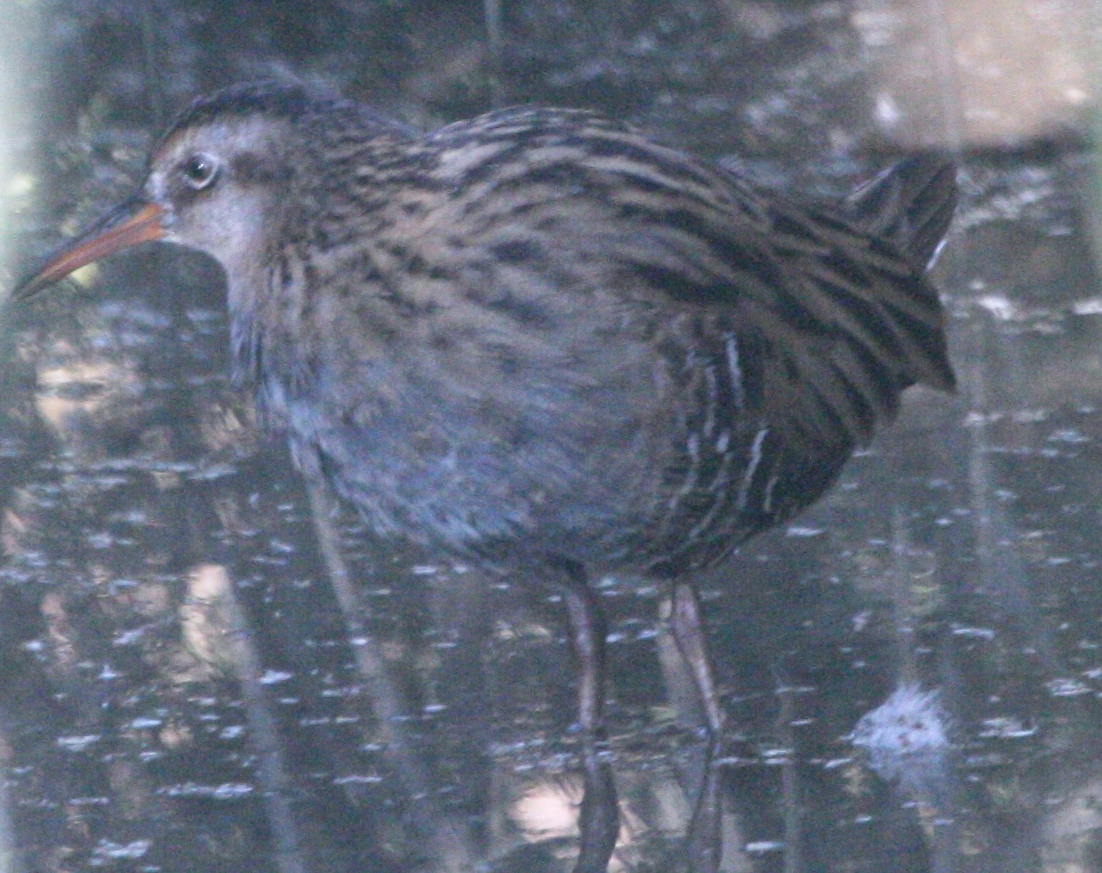
Eastern Water Rail (Brown-cheeked Rail) Rallus indicus
Siberian Rubythroat Calliope Calliope
Yellow-breasted Bunting Emberiza aureola
Hooded Crane Grus monacha
Varied Tit Sittiparus varius 
The three Amur Falcons that had been fixtures on the power lines near Suncheon Bay for a week were joined by a fourth on October 15th, but the best bird of the day by far was an Eastern Water Rail skulking in a reedy ditch. After catching a quick ‘Moorhen-like’ view of it scuttling to cover, I lay on the ground, and after a few minutes, the bird came out and fed among the reeds. I spent an amazing 30 minutes watching it sneak around the murky reedscape. At times it vanished, only to burst from cover and comically skid to a stop, like a reluctant performer being pushed on stage.
  Also seen in fields were six Far Eastern Skylarks, still about 20 Barn Swallows, 15 Stejneger’s Stonechat, two Far Eastern Cisticola, the first Grey-capped Greenfinch I have seen for quite some months, and at least ten Black-faced Buntings. The day was also ‘Peak Motacilli-day’, with eight pipit and wagtail species observed. The seafront saw an influx of Eurasian Magpies, with over 20 seen milling about the area restlessly.
  Amazingly, three days later another Eastern Water Rail (or the same one?!) was spotted in the morning gloom, at a site almost 2 km from first. This bird was seen as it walked casually along a trail just after dawn. It melted into a reed-bed, but returned cautiously several minutes later, and we watched each other for five minutes.
  Other observations included four Amur Falcons still, a dozen Far Eastern Skylark, a Black-browed Reed Warbler, and two relatively confiding Yellow-breasted Buntings. There was a notable absence of swallows and martins overhead. A probable Middendorff’s Warbler was briefly observed as it jumped around near the ground in a muddy patch of reeds. Thanks as always to my fellow Birds Koreans for helping me puzzle through this tricky ID.
  On October 23rd, Hooded Cranes returned to Suncheon Bay, with a total of 29 seen drifting overhead restlessly, unable to find a quiet field to land in for quite some time. The other highlight of the day was an inquisitive Siberian Rubythroat, that watched me from several metres away as I staged an unsuccessful stakeout in an effort to re-find the original Eastern Water Rail. Other notable birds at the bay today included two Bean Geese, perhaps 70 Oriental Turtle Doves, 20+ Far Eastern Skylarks, a similar number of Chinese Penduline Tits heard from the reeds, and nine Grey-capped Greenfinch perched on wires.
  Dawn on October 25th saw Hooded Crane numbers up to 38, eight flyby Eurasian Spoonbills, and low double-digit number of Greater White-fronted Goose and Bean Goose. Later in the morning, an influx of ducks was noted on and around the bay, with 200+ Spot-billed Ducks and half that number of Mallards, with several Common Pochard and Northern Pintails on the periphery. Still plentiful were Far Eastern Skylarks, but there was a paucity of pipit species, with only Olive-backed seen today. Two quick flybys had me scratching my head on the way out – a distant unidentified buteo-looking raptor drifting past in bad light, then a small, light starling. Late Chestnut-cheeked perhaps?
  This week, both Eastern Water Rail sites have been heavily disturbed/destroyed by the relentless construction that has been steadily trashing some of the most productive habitat I’ve ever seen for residents and staging migrants. Perhaps the rails were going to overwinter, but it’s doubtful if they are still there now, what with the dump-trucks rumbling by several feet away every few minutes.
  So far, a formerly quiet stretch of coastal rice fields has had four massive pits (each at least the size of a football pitch, or bigger) gouged out, with two being filled in with concrete already. Is this to make way for more solar panels that no one here wants? It is massively frustrating and depressing to watch the destruction of such amazing habitat. “Suncheon Green City” indeed.
  Away from the bay, the hills around town are bustling with a healthy assortment of tits, but no sign of winter finches or thrushes yet. A very hazy day (hazy all week) on the 24th, with two Japanese Wagtails spotted on a downtown stream.

Saturday, October 17, 2015

More October Suncheon images

Japanese Sparrowhawk Accipiter gularis
Amur Falcon Falco amurensis
Black-faced Bunting Emberiza spodocephala
Black-faced Bunting Emberiza spodocephala
Oriental Honey Buzzard (Crested Honey Buzzard) Pernis ptilorhynchus
Far Eastern Cisticola (Zitting Cisticola) Cisticola juncidis
female Daurian Redstart Phoenicurus auroreus
Grey-headed Lapwing Vanellus cinereus
Oriental Reed Warbler Acrocephalus orientalis
Oriental Honey Buzzard Pernis ptilorhynchus with Grey-faced Buzzard Butastur indicus
Red-necked Stint Calidris ruficollis (top) with Temminck's Stint Calidris temminckii (bottom)
Eastern Yellow Wagtail Motacilla tschutschensis
Grey-headed Woodpecker Picus Canus
Amur Leopard Cat Prionailurus bengalensis euptilura
  It's been a very busy birding week in Suncheon, big report coming soon. In the meantime, here are some more bits and bobs from last week.

Monday, October 12, 2015

Suncheon, October 2-11, 2015


Grey-headed Lapwing Vanellus cinereus
Yellow-breasted Bunting Emberiza aureola - an endangered species whose population has plummeted in recent years
juvenile Yellow-breasted Bunting Emberiza aureola
Amur Falcons Falco amurensis
Temminck's Stint Calidris temminckii
  It has been an exciting couple of weeks at Suncheon Bay, with a trickle of rarely-seen migrants and seasonal turnover keeping me on my toes. With winds regularly blowing down from the Bohai Bay, that feeling that ‘anything’ could turn up helps get me out of bed in the pre-dawn murk. On October 2nd, a strange sight for the bay was about 30 Brown-eared Bulbuls moving across the mudflats – do they seasonally migrate? Eight Stejneger’s Stonechats and a similar count of Far Eastern Cisticolas, an Arctic Warbler still, and three Yellow-breasted Buntings were highlights.
  Two days later, shorebird numbers, especially curlews and godwits, seemed to be much reduced. Pipits ruled several newly-harvested rice fields, with five Richard’s, two Pechora, and five Buff-Bellied Pipits seen. Two raucous Black-Browned Reed Warblers, a personal first for the site, and three Arctic Warblers were spotted in the coastal reedy scrub.
  October 6th marked a return of construction crews to the bay, who toiled noisily at digging up a former rice field. A relay of four dump trucks transported endless loads of muddy soil west to a growing heap near a solar energy farm. One wonders what these three new huge craters at this sensitive site will be used for. Water reservoirs? Foundations for massive new buildings? More solar panels? Sightings for the day included the first Little Grebe of the fall, a flyby Black-faced Spoonbill, four Northern Shovelers, three Northern Pintails, perhaps a half dozen Far Eastern Skylarks overhead, three Richard’s, four Pechora, and more than ten Buff-Bellied Pipits, at least ten Stejneger’s Stonechats, four Far Eastern Cisticolas, the Black-Browed Reed Warblers still, and two Yellow-breasted and two Black-faced Buntings. In addition, my run of mammalian luck continued, with my personal first sighting of an Amur Leopard Cat. Seen from fairly far off, it sat on a trail for a while, then stalked off into a ditch.
  On October 9th, ducks were increasing in number and variety, with more Shovelers and Pintails seen amongst the Mallards, Eastern Spot-billed Ducks, and Eurasian Teals. Moving inland to get away from construction noise and dust proved a fortuitous move. Three Amur Falcons were soon spotted hawking insects above the rice fields, and even eating them on the wing at times, Hobby-like. Several Common Snipes and pipits were put up as a result of the low-level activity. Best of the day was a juvenile Grey-headed Lapwing, which I almost stumbled over as I came around a corner on a small trail between rice fields. It gave spectacular flight views before dropping down into a nearby muddy pond, almost disappearing amidst the lapwing-coloured mud. It was well-watched for close to an hour as it casually paced, preened, and rested. High single-digit numbers of four pipit species (Richard’s, Pechora, Buff-bellied, and Red-throated) were seen in and over the fields, and the morning ended with several Black-faced and Chestnut-eared Buntings, and a Siberian Rubythroat that haltingly flushed across a path.
  The next day on nearby ‘Flying Squirrel Mountain,’ ten Oriental Honey Buzzards, four Grey-faced Buzzards, and two Northern Hobby were a treat to watch as they rode the wind currents. On the way down, a Japanese Sparrowhawk was seen at a grave site, as well as the season’s first six Olive-backed Pipits.
  A complete lack of swallows on the 9th was counterbalanced by renewed hirundine action overhead on the 11th, with about 40 Barn Swallows, half that number of Red-rumped Swallows, and three Sand Martins feeding over the fields. Other notable sightings included a Northern Hobby, two Amur Falcons still, and a drab Temminck’s Stint mixed in with eight slightly-larger Red-necked Stints. A single Grey-faced Buzzard flew across the bay headed southwest. A rare day off for the construction crews meant a mercifully quiet morning, and a renewal in small bird activity in the scrub around ‘the pit.’ A dozen Stejneger’s Stonechat now, with four Far Eastern Cisticolas sprinkled in, three Yellow-breasted Buntings (including what seemed to be a juvenile bird), a cracking male Chestnut-eared Bunting nearby, and a dozen Black-faced Buntings scattered among the ditches. Several Far Eastern Skylarks were heard overhead, and an Arctic Warbler lurked nervously in a small patch of coastal trees, where it has been since September 24th. 

Friday, October 9, 2015

Striking North - Seosan, September 27-28, 2015

Birding among forsaken monoliths
The fields of Seosan


Seosan Super Moon
This way to Birdland! Sigh.
Ridiculous 'Birdland'
Dreaded Chuseok traffic
Former Eastern Cattle Egret Bubulcus coromandus
Peregrine Falcon Falco peregrinus with lunch
Black-browed Reed Warbler Acrocephalus bistrigiceps
First-year Red-throated Pipit Anthus cervinus
Pied Avocet Recurvirostra avosetta
  Two weekends ago, Loghry and I took a much-needed bird trip over Chuseok, Korea's Thanksgiving. Our original plan to hit Gageo-do was scuppered by forecast high winds that would have meant trouble for the ferry, so we opted for Seosan, an agricultural coastal plain about halfway up South Korea's west coast. We started things out in Suncheon, scoping out my patch at the bay. Nothing too nutsoids, but duck variety and numbers were up, and it was fun picking through shorebirds with Loghry's scope. The trip north to Seosan was slowed to a crawl at times by the infamous Chuseok traffic, that sees 35+ million Koreans take to the roads. Ugh.
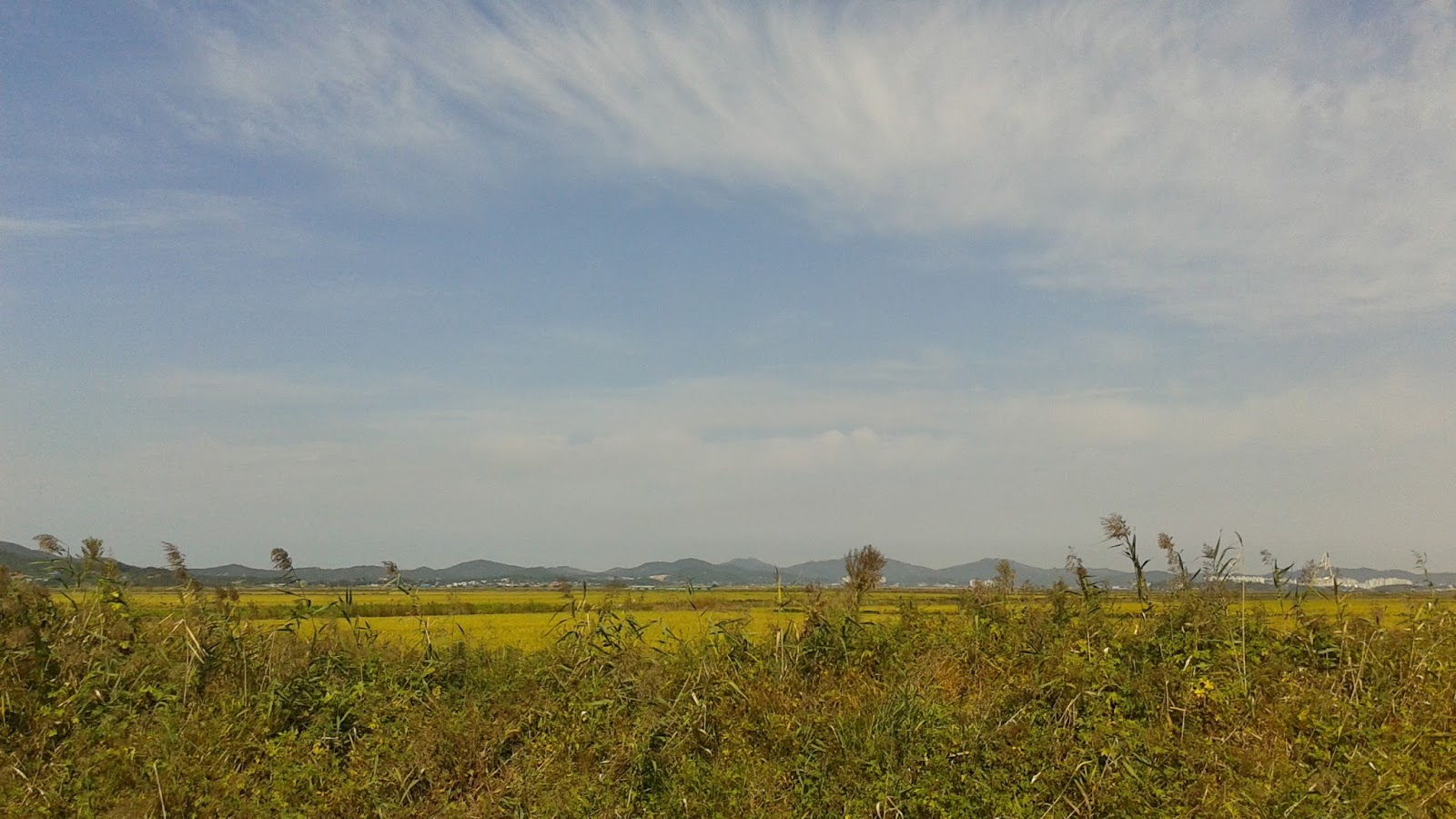
  Acting on some hot tips from fellow Birds Koreans, we checked a few spots that have been known to host Pheasant-tailed Jacana and Watercock (shakes both fists, muttering oaths) in the past, but it was most likely a touch too late in the year for those specials.
  The rice fields kept us busy as we picked through the many snipes and pipits skulking in ditches. We had quite a few Common Snipes, Buff-bellied Pipits, and a few Red-throated Pipits as well - always an exciting species to watch, although the first year birds can be tricky to separate from Buff-bellied, especially at a distance. A few pacing Black-faced Spoonbills were a welcome sight among the egrets, as Black-browed Reed Warblers skulked among the reeds.
  The bird of the trip was Jason's first (and my second) Pied Avocet. Gorgeous bird! "Th-Th-That's not a Shelduck!!" Giddy high-fives all-round.
  Visible for miles on a hillside was Seosan Birdland - a ridiculous eyesore that appears to be nothing more than another wasteful and poorly-conceived tourist trap. Busloads of visitors can gawk at stuffed birds, climb on giant fibreglass cartoon birds, play with touch-screens, and buy t-shirts and hot dogs on sticks. It doesn't appear that birders, the local landscape, or indeed birds were considered when this repugnant white elephant was birthed.

Sunday, October 4, 2015

Siberian Flying Squirrel

Siberian Flying Squirrel Pteromys volans
  While hiking a new mountain outside of Suncheon yesterday, I was lucky enough to have a rare encounter with a Siberian Flying Squirrel. These shy and mostly nocturnal critters are not often seen, but apparently the females and young sometimes feed during the day. A quick search online shows them listed as endangered in Korea (but not protected), and apparently they aren't meant to be found in this part of the peninsula.
  I spotted this one by almost walking into it - it was clinging to a tree at eye level, and for a moment I couldn't figure out what I was looking at. Slightly larger than a chipmunk, all I initially saw were the massive oil-drop eyes and a tangle of bunched-up armpit 'wings'. It eventually scuttled silently up the tree and watched me watch it for several minutes, before...lift-off. The squirrel repositioned itself a few times, then hurled itself off the branch. It fell straight down for a moment, then spread its limbs and swooped upwards, gliding expertly to a tree perhaps 50 feet away. It looked like a rectangular grey sheet of A4 paper, its tail flattened out and acting as a rudder. A truly stunning encounter - when it flew, I actually forgot to breathe for about 20 seconds. I feel very fortunate to have shared a moment with this exceedingly shy and gorgeous creature.