Sunday, May 5, 2019

Out and about on Gageo Island

Gageo's harbour and 1-Gu village as seen from
 the grassy bluff in the next picture...
...and from half-way up the steep zigzag road in the previous picture 
The path up and out of the quarry in the pea soup
Mysterious stone paths and walls up in the hills
The long road to 2-Gu, as seen from atop the pass
Looking down into 2-Gu - the creepy old school has been razed since 2013
The switchback road out of 2-Gu, and a sprinkling of houses
 on the cliffs, perhaps only 3-5 of which are still inhabited
The haunted goat cliffs
Lonely Hangri Village in 2-Gu
'Turdus Trail' in Hangri Village, 2-Gu
One of numerous abandoned houses in Hangri Village,
harkening back to a different century (or two) 
The even more remote village at 3-Gu
Gageo's lighthouse at 3-Gu

  May 2nd was last morning on Gageo, and was the first birding session there without recording a new species…so I left. My original plan was to head to Eocheong Island at the beginning of the week, but I got logistically complacent, and kept rolling the dice on ‘one more day’ on Gageo. Currently in Seoul for a few days of rest, laundry, and shaving my migration beard. The next plan is to strike west from Incheon.
   For most of my two weeks on Gageo, the winds stubbornly blew out of the north – so no big fall of Verditer Flycatchers for this guy. Can’t complain though, it was supremely rewarding to be witness to a small slice of the dynamic force of nature that is spring migration on the East Asian-Australasian Flyway. Still, it would have been fun to be there when those exotic southerly winds blew! There’s always next time…or is there?
   Through my two-week sojourn, Gageo played host to loads of titillating species one can only reasonably expect to see on Yellow Sea islands on migration. The island also held a few surprises, and decent turnover most days. There were highs, and most definitely some lows. I will remember the cold snap and resultant die-off long after I want to forget it – those were a heavy few days.
  Geez, my sleep schedule is still on Gageo time – Gageo-lag. Time for a nap.

Thursday, May 2, 2019

Gageo Island, May 1, 2019


Eyebrowed Thrush Turdus obscurus
Yellow-rumped Flycatcher Ficedula zanthopygia
Rufous-tailed Robin Larvivora sibilans
Light-vented Bulbul Pycnonotus sinensis
putative Narcissus Flycatcher Ficedula narcissina owstoni
"The other" Taiga Flycatcher Ficedula albicilla
possible hepatic Oriental Cuckoo Cuculus saturatus 
Little Whimbrel Numenius minutus
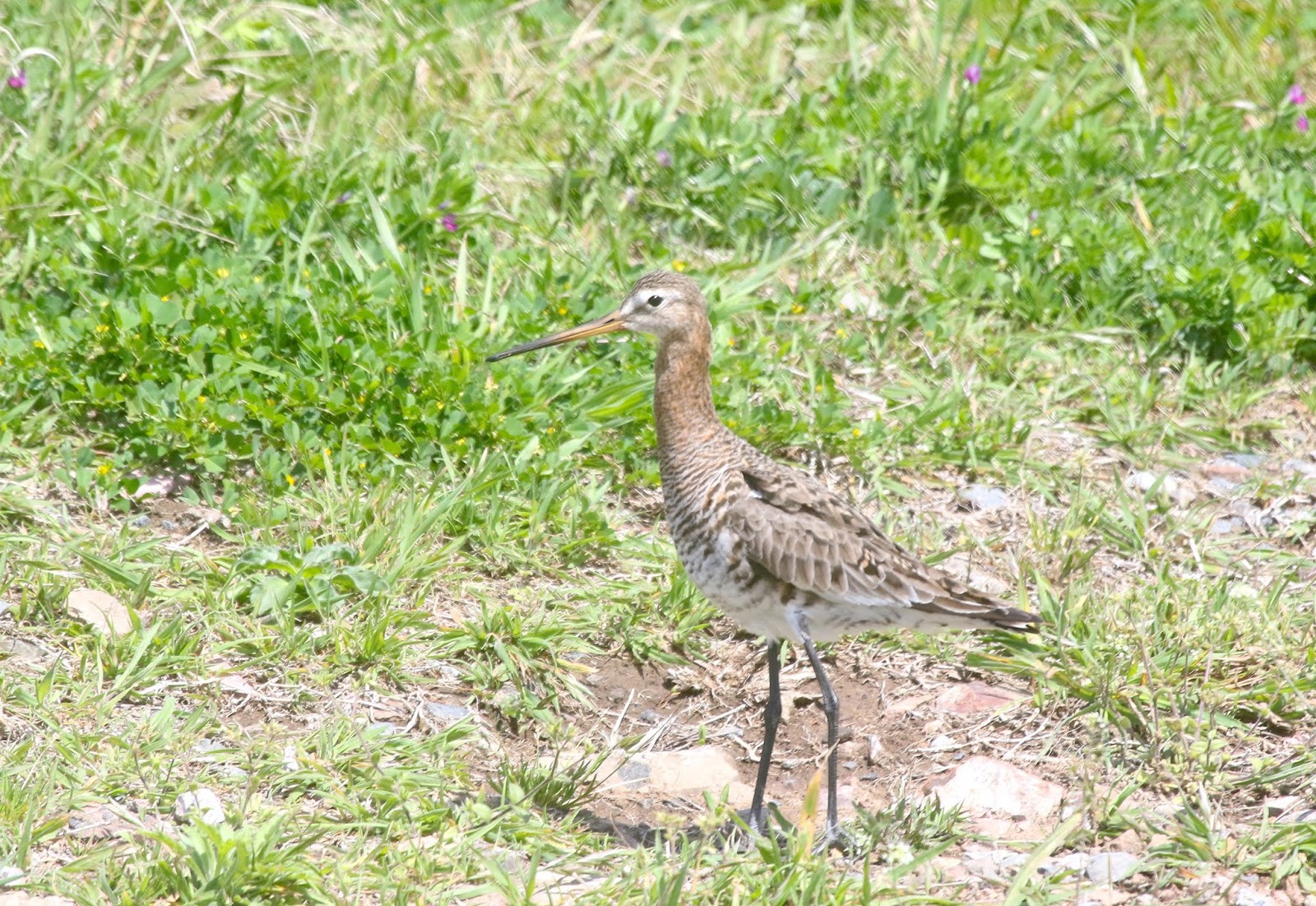
Black-tailed Godwit Limosa melanuroides
(with a larva it caught by probing in the dirt)
Common Moorhen Gallinula chloropus
  Hot and hazy, and more of the same, bird-wise. Probably time to cut loose and drift back east. ‘Only’ 84 species, with just two new species today – a Common Moorhen in the quarry, and a Great Crested Grebe in the waters off the quarry. Also in the quarry, I found the ‘other’ Taiga Flycatcher, the one with the less vibrant throat, also dead. It had, in bird-banding terms, ‘zero fat.’ That cold snap was brutal. The Common Greenshank that haunted the mossy slab was also found dead today. It was at the base of the main road up the hill, flattened by a vehicle.
  There were noticeably more turdus thrushes above the quarry, with five species recorded, most notably a dozen new Eyebrowed Thrush. More Oriental Reed Warblers have also been noted around town, and they’re finally vocalizing. The past two days have also seen an apparent bump in the numbers of both Blue-and-white Flycatchers and Common Rosefinches. The lone Large-billed Crow still loiters around the dump. Towards the end of my birding day, I puzzled over a flycatcher with a green back and yellowy underparts up on the forested slopes…probably just a female owstoni Narcissus?
  In the old gardens, a hepatic cuckoo flew into a tree, and I’m guessing it’s the Oriental Cuckoo I’ve been hearing in that area for the past several days. A ‘dark’ cuckoo (?) flew by earlier in the day, making a most peculiar eight-note flight call. I recorded myself doing an impression of what I heard, and if anyone wants a good laugh, I can send it your way.

Tuesday, April 30, 2019

Gageo Island, April 30, 2019


Little Whimbrel Numenius minutus
Black-tailed Godwit Limosa melanuroides
Yellow-browed Bunting Emberiza chrysophrys

Oriental Dollarbird Eurystomus orientalis
Mugimaki Flycatcher Ficedula mugimaki
Siberian Weasel Mustela sibirica
  Still cold and blustery in the early morning, but by late morning the sun finally returned. With the sun came the insects, and a redoubling of avian activity – wagtails cavorting with grasshoppers, buntings dogfighting with moths, and flycatchers...flycatching. I’ve noticed that Stejneger’s Stonechats are adept at finding caterpillars, which sustained them even during the cold snap – I haven’t seen any dead stonechats yet.
  I logged 88 species over eight hours, with seven new species noted: a breeding-plumaged Little Grebe in the harbour, a probable Ruddy-breasted Crake (quick views in a ditch near the dump, all clues point to this species), two Black-tailed Godwits at the mossy slab and another in 2-Gu, two Oriental Scops Owls calling from the hills on the way to 2-Gu, two quick looks at a lark that was possibly a Greater Short-toed Lark, a Mugimaki Flycatcher (love that name) near the power plant, and two Grey-capped Greenfinch at the pass.
  Nothing crazy in 2-Gu, besides an interesting variety of turdus thrushes, and loads of the most predominant migrants seen throughout my sojourn on Gageo – Olive-backed Pipits and Black-faced Buntings.
  Other interesting sights included four Striated Herons, at least four restless Chinese Pond Herons on the road up to the pass, three Japanese Quail in 2-Gu, a Little Whimbrel still around the dump, and an Oriental Dollarbird on the road to 2-Gu.

Monday, April 29, 2019

Gageo Island, April 29, 2019

White-shouldered Starling Sturnia sinensis
with 
White-cheeked Starling Spodiopsar cineraceus 
Chestnut-cheeked Starling Agropsar philippensis
Taiga Flycatcher Ficedula albicilla
  More cold and wet weather overnight, so more dead birds littering Gageo-do. Unfortunately, one of the Taiga Flycatchers was found dead near the power plant, having succumbed to the cold and resultant lack of available insects. I saw it in the same area yesterday, lethargically searching for food. Many of the birds I saw along the trails today seemed similarly punch-drunk and not as wary as they need to be.
  With the rains and south-easterly winds, there was a clear-out of many of the birds that have been stuck in town for the past week, without much in the way of arrivals. The three new species noted around 1-Gu in the morning were two Little Whimbrels, a Rufous-tailed Robin, and a White-cheeked Starling. The Little Whimbrels, like their ‘full-sized’ cousin yesterday, were wandering around in the parking lot for the new quarry, perhaps wondering what had happened to the weedy gravel field they favoured in the old configuration of the quarry.
  The heavy rains began in earnest at about 10 a.m., forcing me to retreat inside for the day. I managed to get out briefly in the late afternoon for a quick rain recon, and found some new shorebirds at the mossy slab – four Terek Sandpipers, six Grey-tailed Tattlers, and a Mongolian Plover. Tomorrow promises no rain – maybe the larks and the Black Redstarts will show up?

Sunday, April 28, 2019

Gageo Island, April 28, 2019

Red Turtle Dove Streptopelia tranquebarica
male Citrine Wagtail Motacilla citreola
Sand Martin Riparia riparia
Red-billed Starling Spodiopsar sericeus
Oriental Pratincole Glareola maldivarum
Long-toed Stint Calidris subminuta
Whimbrel Numenius phaeopus
Common Greenshank Tringa nebularia
  Dawn was grim, both weather-wise, and with the body count along the streets and trails of 1-Gu. Another cold night killed off a lot of migrants, many of which show up on Gageo exhausted, and with little fat stores. The inclement weather meant there were no flying insects to feed the birds, nor sun to warm them, which led to distressing scenes of dozens of dead and dying birds in some places. I know this is part of migration, but it hurt my sensitive heart to see birds immobile on the trail, heads tucked under their wings, surrendering to the elements and waiting to complete the final journey.
  I decided to check out the road to 3-Gu to see what was up there. At a small forest edge clearing, three doves flushed across the road – two Oriental Turtle Doves, and a smaller dove that was notable for the bold, solid colours and 'geometric' patterns on its upperparts. Red Turtle Dove! It split from the other two doves and dropped onto the slope next to the road. I managed to get a headless record shot of the bird as it sheltered from the stiff winds and rain, before it dissolved into the undergrowth.
  Also on this steep and winding road were a Eurasian Wryneck, at least 100 Tristram’s Buntings, and a personal first Oriental Dollarbird of spring.
  There was more shorebird variety around the mossy slab, including a Whimbrel that was wandering around the parking lot to the new and improved quarry, taking shelter under a truck at one point. The day's total was 84 species, my highest tally of spring so far. Tomorrow could be interesting, with rain and wind supposedly coming out of the south.

Saturday, April 27, 2019

Gageo Island, April 27, 2019

Bluethroat Luscinia svecica
Siberian Blue Robin Larvivora cyane
Red-throated Pipit Anthus cervinus
Black-faced Bunting Emberiza spodocephala
Common Rosefinch Carpodacus erythrinus
  I was feeling groggy this morning, so what better way to wake up with an adrenal spine-shock than almost tripping over a Bluethroat at dawn, ten feet from the front door of my minbak. If I could bottle that feeling, I’d be set for life. Get your bottled Bluethroat at dawn here! Line up, make an orderly line!
  Siberian Blue Robins and Siberian Rubythroats continue at the edges of town, and another Common Rosefinch was seen at the top to the gully. There was the feeling of clear-out in the afternoon, and the lion's share of the swallows have moved on. Fingers crossed Monday’s forecast southerly winds change things up a bit here.

Gageo Island, April 26, 2019

Taiga Flycatcher Ficedula albicilla
Blyth’s Pipit Anthus godlewskii
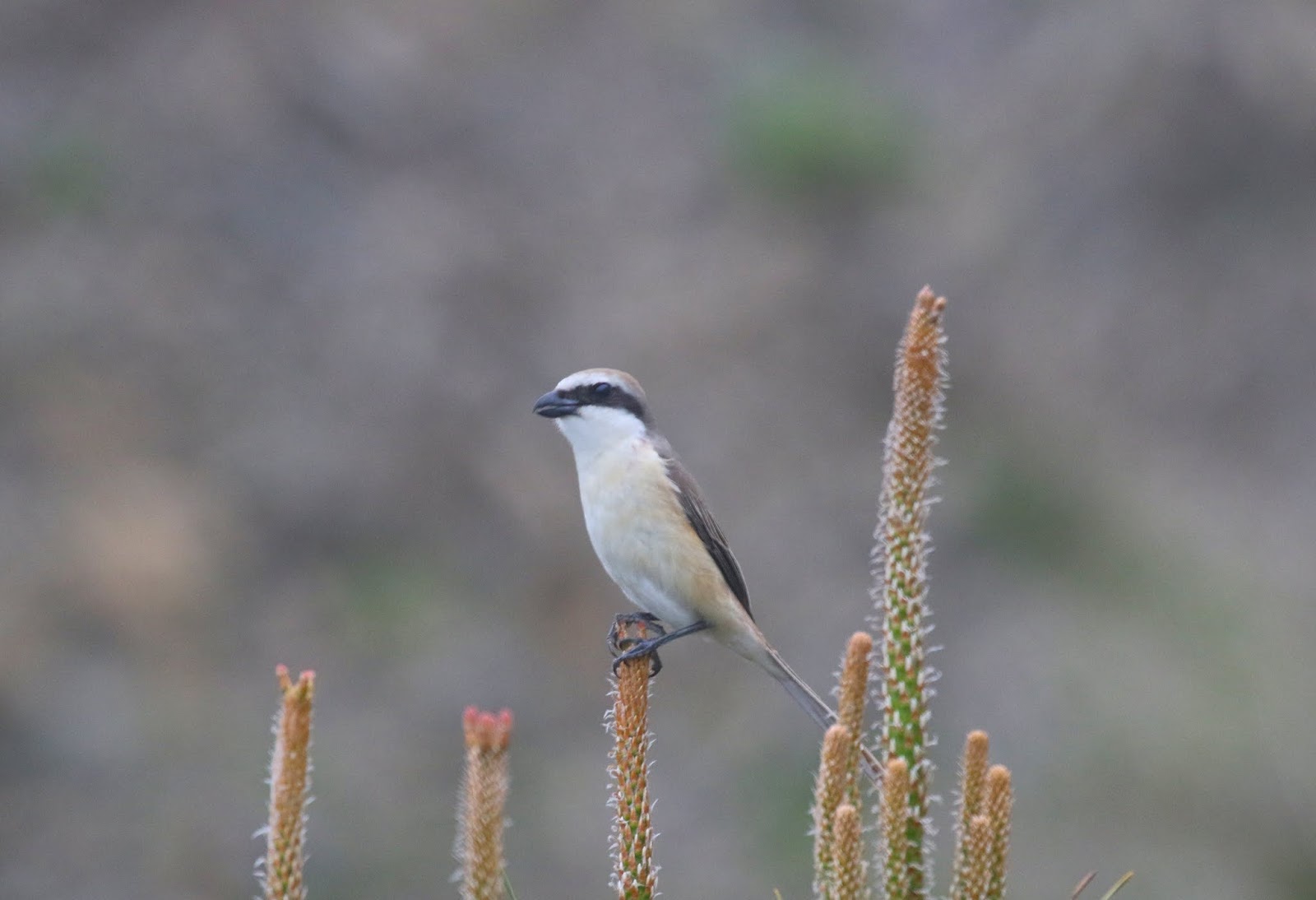
Brown Shrike Lanius cristatus
Tristram’s Bunting Emberiza tristrami
Curlew Sandpiper Calidris ferruginea
Pacific Golden Plover Pluvialis fulva
Chinese Pond Heron Ardeola bacchus
Heat-seeking hirundine heap
Red-rumped Swallow Cecropis daurica
  My knees were effed today – felt like my legs were slightly different lengths. In spite of crisp northerly winds, birds were moving to where they need to go, with noticeable turnover today, and 81 species logged. It was quite fresh at dawn, with temperatures hovering in the low single digits.
  The cold snap unfortunately resulted in quite a few dead birds, mostly Red-rumped Swallows. I’ve been finding dead birds every day, as I have in past springs, and it reminded me of the hugeness of what migration is, and why I want to be here to witness it. These birds travel massive distances twice a year, running the gauntlet of innumerable fatal threats, just to push their blood into the future. It’s a big deal.
  Notable at the mossy slab today were a Striated Heron, a Chinese Pond Heron, two Pacific Golden Plovers, a Kentish Plover, four Long-toed Stints, a Curlew Sandpiper, a Common Greenshank, and four Wood Sandpipers (two of which decided that Gageo was a good place to copulate). There were two probable Pintail Snipes and a Brown Shrike (singing a Bluethroat-like remix of mimicry) above the quarry.
  Other highlights included a Northern House Martin, two female Citrine Wagtails near the dump and a male on the other side of town, several Richard’s and Blyth’s Pipits (ten species of pipits and wagtails on the day), two male Taiga Flycatchers (with differing intensities of throat colouration) on the west side of 1-Gu, a first Grey-sided Flycatcher of the spring, and ten species of buntings. Several Oriental Turtle Doves have been seen every day – I don’t seem to recall seeing them on Gageo on 2013, but I’ll have to check my notes.
  The day ended with some late afternoon sunshine, which probably saved the lives of some swallows – there were disorderly, exhausted ranks of hirundines sunning themselves on every available horizontal surface in town.