Friday, January 29, 2021

CORE vs HORE

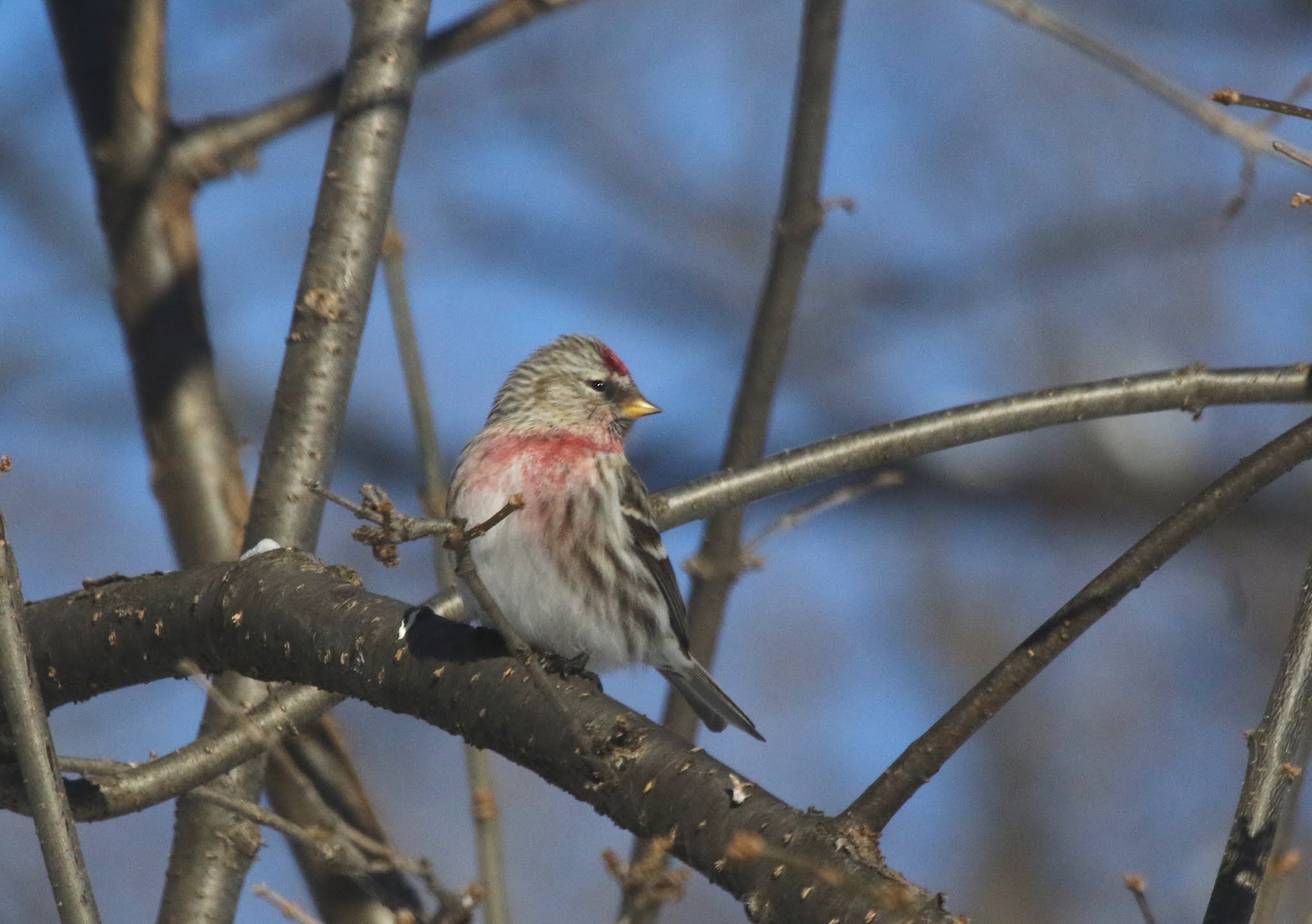
Common Redpoll Acanthis flammea

Common Redpoll Acanthis flammea

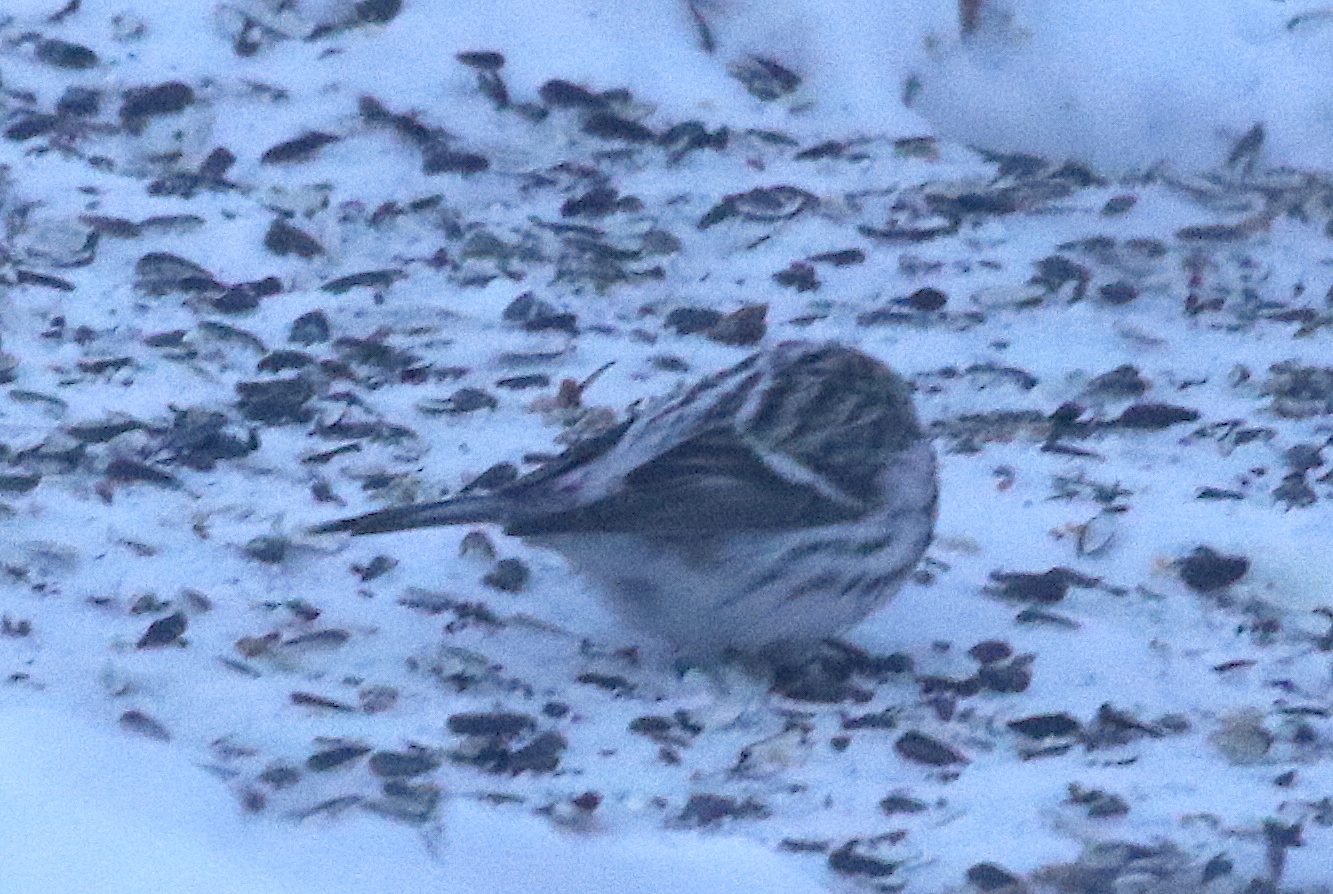
Apparently not a Hoary Redpoll


Sibley's Hoary showing much potential for streaking


Me after 10 minutes of Redpolling


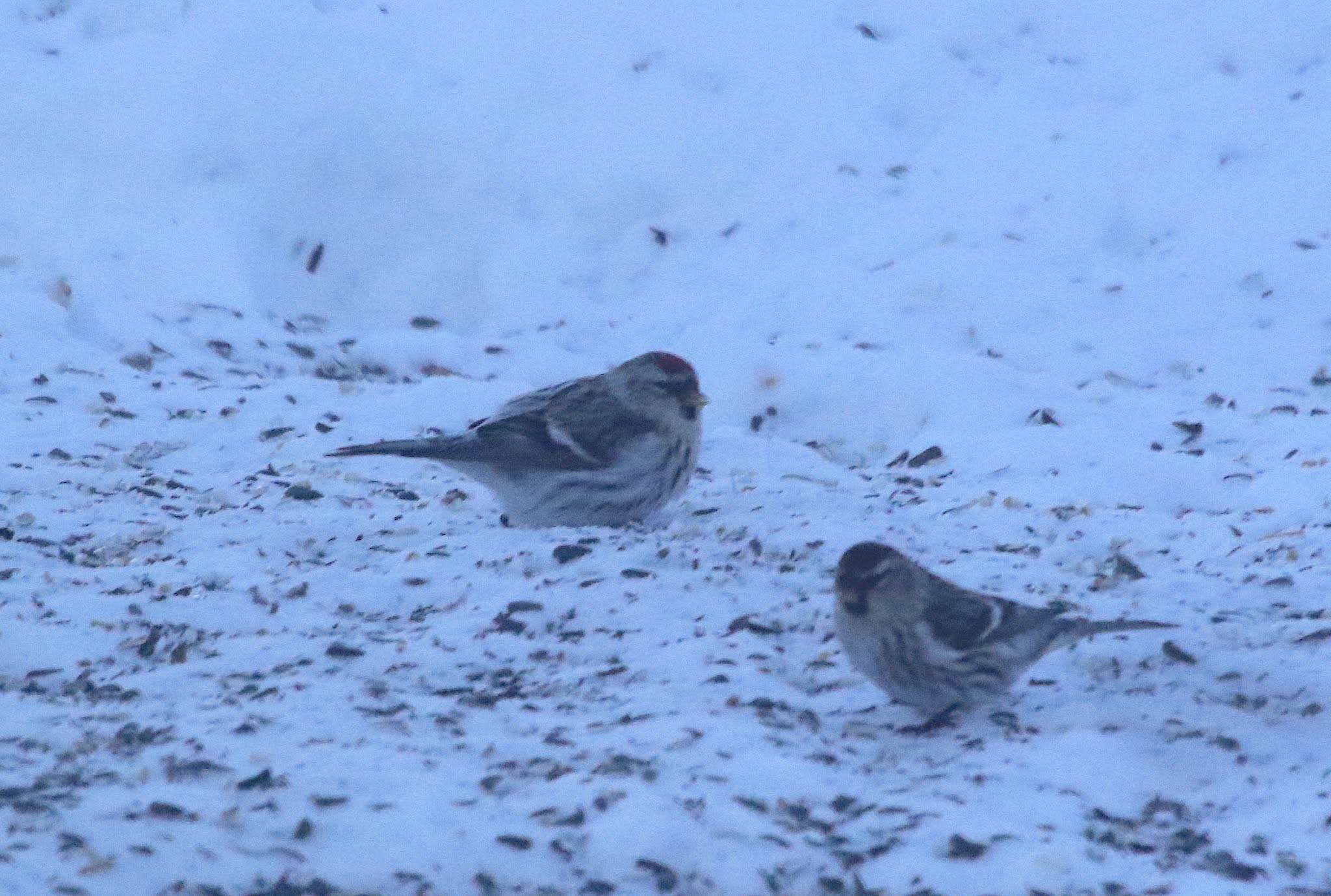
AKA "The Redpoll Venn diagram from Hell," Mount Royal Cemetery, January 24, 2021

  That’s COmmon REdpolls vs HOary REdpolls, one of the oldest and most dastardly of birding brain-busters. With an irruption year of northern species, and several recent sightings of Hoarys mixed in with a batch of Common Redpolls at the Mount Royal Cemetery feeders (maintained tirelessly by George L), it seemed like a golden opportunity to gain some experience with the relatively scarce, and thoroughly frustrating species.

  There is a range of mythical features one must look for to pick out the odd HORE from a pack of ho-hum COREs: smaller bill, white rump and undertail, relatively reduced streaking, more white in the wing coverts, bull-necked appearance, silvery and fluffy overall. Of course, there is much overlap within any one of these features between the two northern chonkballs…much like an Orange-crowned Warblers (or every gull ever), birds showing just one or two of these features may not be enough to rule Hoary in or out. I was even reading online about how the sacred bill size may not always be a reliable feature:

"Importantly, measurements of bill depth do not differ significantly between the species, so a Hoary should have a short and stout bill (if a 7 mm bill can be called stout). In other words, a Common’s bill should be longer and more slender, a Hoary’s shorter and stubbier. But this is also subject to overlap, and we don’t know if the longest-billed Hoaries still have a relatively thick bill or a bill shape just like Common (or if the shortest-billed Commons have slender or stout bills)."

  Long story short, I thought I’d spotted two good candidates for HORE after standing around and freezing my face off (red Poll) for a few hours. And it was cold up there — solidly into the low minus teens when that Mount Royal wind got up. We were well prepared with layers, neck tubes, and flap hats, but cloth can only do so much. Toes started freezing after five minutes of inaction/immobility, and fingers…who needs those anyway?

  After running my images of potential Hoarys by some online birders, they were dismissed as COREs. One guy did so based solely on “too much streaking,” but when I showed him Hoarys in Sibley’s with as much (or more) streaking, he changed his tune to “Well maybe it’s a female or immature Hoary, but it’s definitely not a male. Anyway, people think they’re not even a distinct species anyhow, so whatever.”

  Well said. So it seems that unless you spot the ‘perfect Hoary Redpoll’ — one that shows every single feature, then Hoarys don’t exist, and it’s all just in your head. Or something. And I could just suck at birding.

  In any case, it was nice to get out of the house.

Tuesday, December 8, 2020

Mount Royal Cemetery, Nov 25, 2020


Bohemian Waxwing Bombycilla garrulus

White-winged Crossbill Loxia leucoptera

  Winter laid a surprise siege around the colossal bowl of the Mount Royal Cemetery on the 25th of November. In spite of the stinging cold and shin-deep snow in spots, for some reason I neglected to wear my shiny new winter boots, because I'm a giant dummy. As a result, in addition to losing three Sherpas and most of our sled dogs, I had all of my toes crudely amputated due to frostbite back at base camp. Spirits remain high, however, as we expect the relief ship to breach the pack ice by late spring, to deliver us to salvation.

  The birds of the day were only seen fleetingly, high overhead: conservatively 75 White-Winged Crossbills (assuming it was a relatively mono-specific flock) south towards Mount Royal.

  Another highlight was a lone Bohemian Waxwing gorging on fruit. It offered great looks at all the field marks, but alas, no Cedars to compare it to. Species total was 14, including 12+ American Goldfinch and 18+ Mopes (Pine Grosbeak).

Wednesday, December 2, 2020

Forsaken Visions of Futures Past (What?!)


White-winged Scoter Melanitta fusca deglandi

White-winged Scoter Melanitta fusca deglandi

Black-crowned Night Heron Nycticorax nycticorax

November 7, 2020, Parc Jean-Drapeau on Île Notre-Dame

  Another tardy birding report, with more yet to come. I last visited Parc Jean-Drapeau on a March 5, 2020 Pine Warbler twitch, that surely was 25 years ago (The Before Times!).

  Being on Île Sainte-Hélène that day felt like being in Asia somehow…the balmy weather (18 and hazy), bare trees, and calendar were all wildly out of sync. The vast tourist-friendly expanses of concrete and polished metal completed the mirage.

  Île Notre-Dame had more of a Cuban vibe. Weedy paths were strewn with the mouldering remnants of a 1960’s vision of the future. Gangneung’s 6-month-old-yet-crumbling Olympic installations had a similar feel to them.

  It didn’t feel overly birdy at any particular moment, but the species count was nickel and dimed up to 28 species. A lone White-winged Scoter loitered with the more common waterfowl in the southeast corner of Lac de l’Île Notre-Dame. A Black-crowned Night Heron was seen on Île Sainte-Hélène from Pont des Îles. A Red-bellied Woodpecker spotted on Île Sainte-Hélène felt notable. At dusk, a bat sp. was shimmering over the reeds on the western bank of Lac de l’Île Notre-Dame.

Thursday, November 26, 2020

Belated Cems

Fox Sparrow Passerella iliaca

Song Sparrow Melospiza melodia

Chipping Sparrow Spizella passerina

Golden-crowned Kinglet Regulus satrapa

Ruby-crowned Kinglet Regulus calendula

American Robin Turdus migratorius

American Robin Turdus migratorius
(Check out that trap-door tongue!)

Pine Grosbeak Pinicola enucleator

Pine Grosbeak Pinicola enucleator

Pine Grosbeak Pinicola enucleator

American Crow Corvus brachyrhynchos
(Just doing Halloween things...)

Eastern Chipmunk Tamias striatus


Mount-Royal Cemetery and Notre-Dame-des-Neiges Cemetery, October 28+31, November 11, 2020

  Been busy. My bird reports may be tardy, but I have been slipping out to bird every now and again.

  The cemeteries yielded 26 species on a brisk October 28th (5 degrees and cloudy). Evening Grosbeaks and Pine Siskins were unfortunately only heard in flight. Highlights included both Sharp-shinned and Cooper’s Hawks, a lone Pine Grosbeak (AKA ‘Mope’), and, in NDN along the north fence, 5 Winter Wrens and 6+ Hermit Thrush.

  Down to 19 species on Halloween. Sunnier, but cooler. Again haunted by more flyover Evening Grosbeaks with no satisfying views. Birds of the day: 6 Fox Sparrows in NDN along the north fence.

  Bizarre weather on Remembrance Day — gloomy and drizzly, but high teens in temp, in the midst of a week-long stretch of summery weather. Species count was 19 again, with more frustrating fickle finch flyovers (White-winged CrossbillsCommon Redpolls). Pine Grosbeak numbers were up, and the ‘feeder Fox Sparrow’ was spotted. At dusk, the ground shook when a massive birch came down hard nearby, narrowly missing several graves. George L and Harry were quick on the scene to investigate, and chew big sticks into smaller sticks.

  On the snowy morning of Nov 4th at 8:15am, I witnessed a window-strike at close range in NDG. A mixed flock of finches came in low and fast across a side street, and two smashed into a large 2nd floor window that was reflecting the sunrise. Not the way I wanted to tick the first Pine Siskin and Common Redpoll for my neighbourhood. It was an absolute horror.